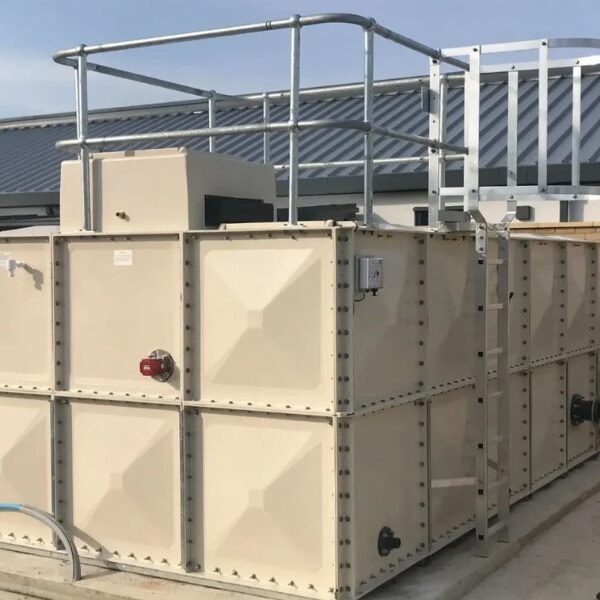
fire sprinkler systems
Home » Cold Water Storage Tanks » Fire Sprinkler Systems
Fire sprinkler systems are necessary because they are an effective means of fire protection. The National Fire Chiefs Council conducted research that concluded that fire sprinkler systems worked as they should in over 90% of the cases they analysed, and in approximately all of the cases, the fire was successfully extinguished. This makes sprinkler systems essential in commercial and industrial settings.
Types of fire sprinkler systems
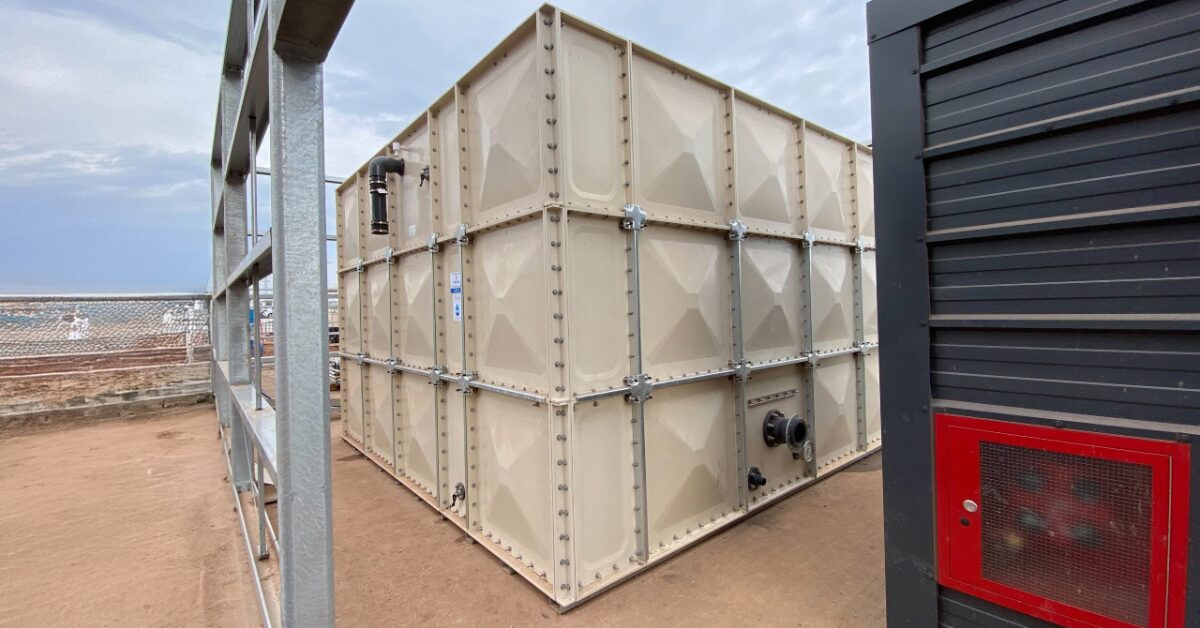
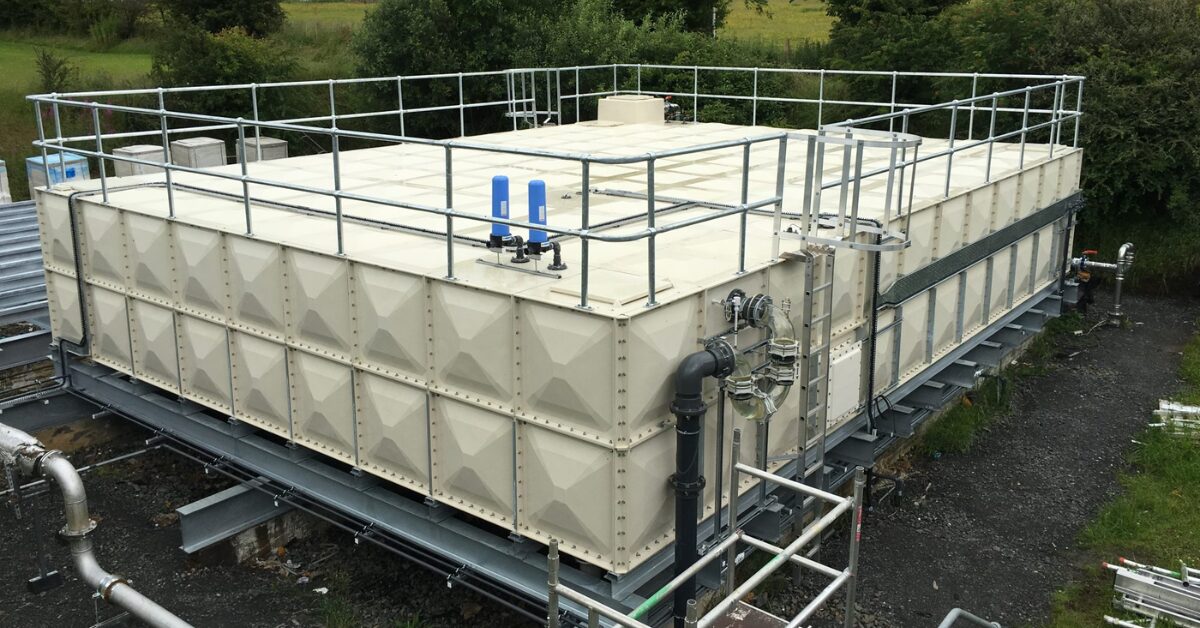
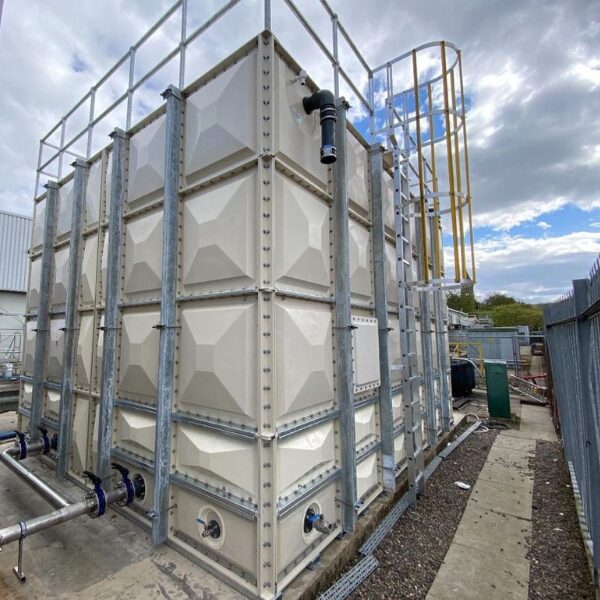
Wet Pipe – This is the most common type found in residential buildings where there is no danger of freezing. Wet pipe sprinkler systems provide a fast-acting solution and are required in high-rise buildings to protect the property and lives of people in the building. We have a range of sprinkler tanks that support your fire sprinkler systems.
Alternate Pipe – Generally, the pipes are full of water during the summer; in winter, they are drained and replaced with compressed air.
Dry Pipe – Unlike wet pipe sprinkler systems, the dry pipe takes longer to activate, so they are commonly used in unoccupied buildings where the pipes may freeze or burst. The sprinkler system is filled with compressed air. Once a fire is detected, the compressed air will go out of the pipe, resulting in water flowing through the pipes to the sprinkler heads.
Pre-action – A combination of wet and dry pipe systems is typically found in buildings at a high risk of water damage. Pre-action sprinkler systems are standard in buildings where it is not suited to have pipework full of water. The pipes are filled with air, and water is only released into the pipes when a fire is detected.
Single supply tank – This sprinkler tank is designed to protect against corrosion and only requires emptying and maintaining once every three years.
Superior Supply Tank – Maintenance checks for this sprinkler tank are only required once every ten years. Life Safety System – These form an integral part of your fire suppression system, especially where evacuating the building depends on the sprinkler system’s performance, and sprinklers are required expressly for life safety purposes. A vital feature of the system is that the sprinkler installation shall be fully operational in all aspects during servicing.
Read More...
- Water Tank Installation & Maintenance
- Cold Water Storage Tanks
- Case Studies

Cold Water Tank Sizing: How to Calculate Storage Volume for Multi-Storey Buildings
A technical guide to cold water tank sizing methodology for multi-storey buildings — covering demand estimation, resilience calculations, water age, Legionella risk, and a worked sizing example.
Confined Space Entry in Building Maintenance: Obligations and Safe Systems
A practical guide to confined space entry obligations for building maintenance teams and contractors — covering the Confined Spaces Regulations 1997, permit to work, atmospheric testing, standby arrangements, and cold water tank entry.
Backflow Prevention in Building Water Systems: Fluid Categories and Device Selection
A technical guide to backflow prevention under the Water Fittings Regulations — fluid categories 1 to 5, device types for cold water cisterns, the Type AG air gap requirement, and common compliance failures.
Cold Water System Commissioning: Cleaning and Disinfection to BS EN 806-5
A practical guide to cold water system commissioning, cleaning, and disinfection in line with BS EN 806-5. Covers procedure, chlorination residuals, flushing, clearance for service, and handover documentation.