
KIWA Certification for Water Tanks and Fittings: A Complete Guide
Home » Water Regulation » KIWA Certification Water Tanks Fittings
KIWA certification is an internationally recognised mark of quality, safety, and compliance for products used in drinking water systems. For water storage tanks, pipes, and fittings, KIWA approval confirms that materials are hygienic, durable, and safe for potable (drinking) water.
While WRAS approval is the standard requirement in the UK, KIWA extends recognition across Europe and globally. For manufacturers such as Tricel, offering both WRAS and KIWA approvals demonstrates a commitment to water safety and international compliance.
Key Highlights
- Origin: KIWA was founded in 1948 in the Netherlands as Keuring Instituut voor Waterleiding Artikelen (“Testing Institute for Water Supply Articles”).
- Scope: Now a global certification, testing, and inspection organisation.
- Focus in water sector: Certifies tanks, pipes, and fittings as safe for drinking water.
- Recognition: WRAS is UK-specific, KIWA has broader European and global acceptance.
- Benefits: Proves products are non-toxic, hygienic, durable, and compliant.
- Tricel tanks: Available with both WRAS and KIWA approvals, ensuring compliance across multiple markets.
What is KIWA
KIWA began in the Netherlands in 1948 as the Keuring Instituut voor Waterleiding Artikelen, which translates to Testing Institute for Water Supply Articles. Its initial mission was to certify materials and products used in drinking water systems to guarantee safety and hygiene.
Over time, KIWA evolved into a global certification body. Today it operates internationally across industries such as:
- Water and wastewater
- Energy and gas
- Construction and infrastructure
- Agriculture and food safety
In the water sector, KIWA still reflects its original purpose: ensuring tanks, pipes, valves, and fittings do not contaminate potable water and meet strict durability and performance standards.
KIWA Certification for Water Tanks
For cold water storage tanks, KIWA certification ensures:
- Safe materials: GRP or plastics tested for non-toxicity.
- Durability: Resistance to pressure, stress, and environmental factors.
- Hygiene: Smooth, non-porous surfaces that limit bacterial growth.
- Traceability: Batch testing and certificates for compliance records.
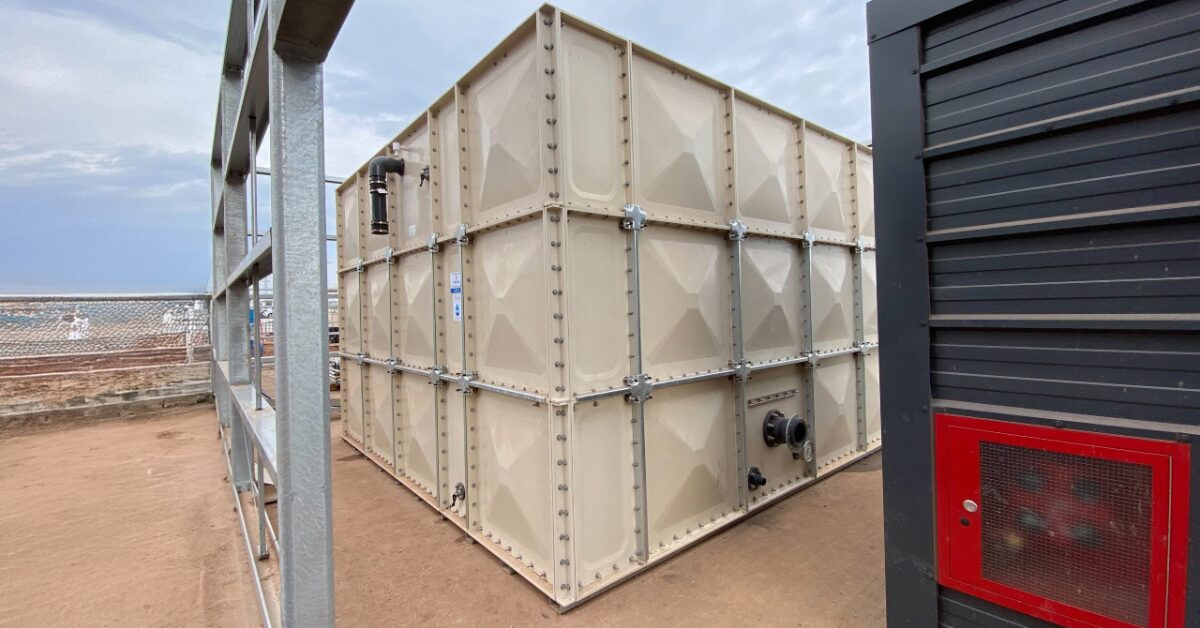
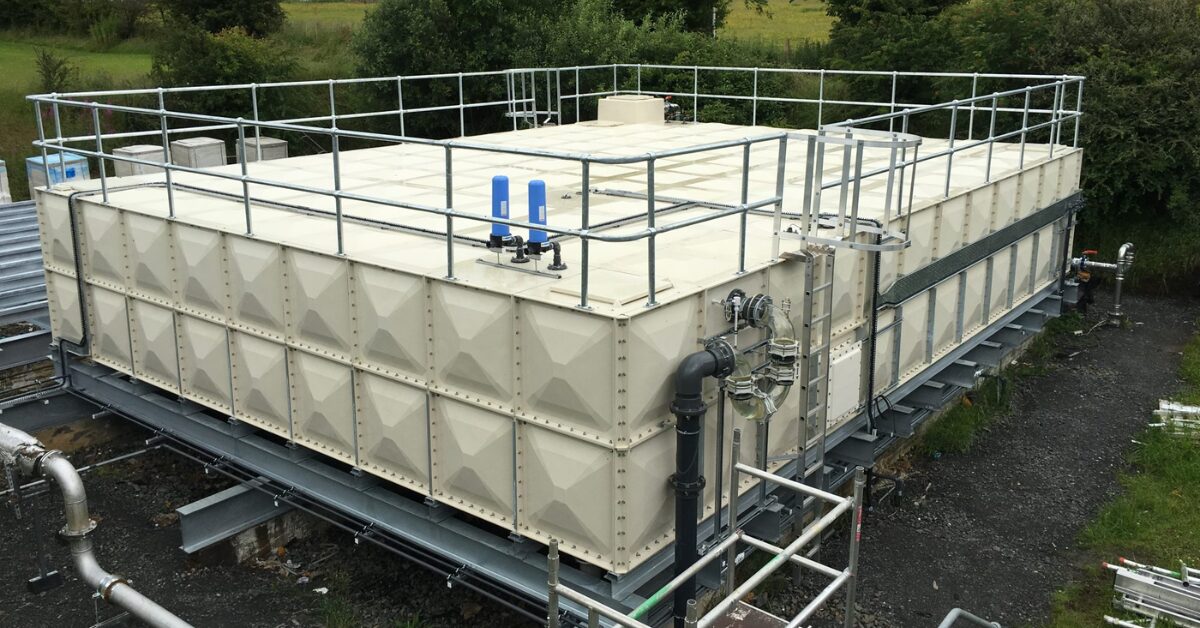
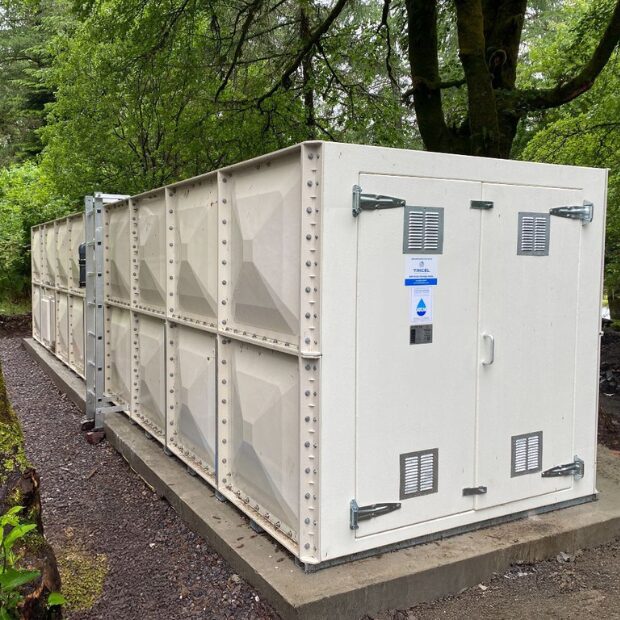
Tricel can supply tanks with KIWA approval for international projects, ensuring recognition beyond WRAS requirements in the UK.
WRAS V KIWA: Key differences
Although both certifications cover drinking water safety, their focus and recognition differ:
| Feature | WRAS (UK) | KIWA (International) |
|---|---|---|
| Origin | UK (Water Regulations Approval Scheme) | Netherlands, global certification body |
| Scope | UK Water Supply (Water Fittings) Regulations | Europe & international compliance |
| Focus | Preventing contamination in UK systems | Hygiene, safety, durability, performance |
| Recognition | Required for UK compliance | Accepted widely across Europe and beyond |
| Best use | Domestic UK projects | International or cross-border projects |
Key takeaway: WRAS is mandatory in the UK, but KIWA certification provides broader acceptance internationally.
Why KIWA Certification Matters
- International compliance – recognised by European and global water authorities.
- Added assurance – products are independently tested for hygiene, strength, and durability.
- Regulatory acceptance – simplifies approval processes outside the UK.
- Competitive advantage – demonstrates manufacturers meet high standards across multiple markets.
KIWA originally stood for Keuring Instituut voor Waterleiding Artikelen, Dutch for “Testing Institute for Water Supply Articles.” Today it is used as a global brand name.
It confirms a product has been independently tested and approved for potable water use, ensuring it is safe, hygienic, and durable.
No. WRAS is the UK scheme required for compliance with water regulations. KIWA is an international certification body with wider recognition across Europe and globally.
WRAS is required in the UK. KIWA is not mandatory in the UK but is useful for international projects and provides additional assurance of quality.
Yes. Many tanks, including Tricel’s GRP range, can carry both certifications, meeting UK and international requirements.
Read More...
- Water Tank Installation & Maintenance
- Cold Water Storage Tanks
- Case Studies

Cold Water Tank Sizing: How to Calculate Storage Volume for Multi-Storey Buildings
A technical guide to cold water tank sizing methodology for multi-storey buildings — covering demand estimation, resilience calculations, water age, Legionella risk, and a worked sizing example.
Confined Space Entry in Building Maintenance: Obligations and Safe Systems
A practical guide to confined space entry obligations for building maintenance teams and contractors — covering the Confined Spaces Regulations 1997, permit to work, atmospheric testing, standby arrangements, and cold water tank entry.
Backflow Prevention in Building Water Systems: Fluid Categories and Device Selection
A technical guide to backflow prevention under the Water Fittings Regulations — fluid categories 1 to 5, device types for cold water cisterns, the Type AG air gap requirement, and common compliance failures.
Cold Water System Commissioning: Cleaning and Disinfection to BS EN 806-5
A practical guide to cold water system commissioning, cleaning, and disinfection in line with BS EN 806-5. Covers procedure, chlorination residuals, flushing, clearance for service, and handover documentation.