insightfulacute

We value your privacy

Our website uses cookies to enhance your experience. By continuing to use our website, you are agreeing to our use of cookies. Necessary cookies are always enabled. You can read more about our Cookie Policy in our Privacy policy

We value your privacy

Cookies are small text files stored on your computer by websites you visit. They help users navigate websites efficiently and enable certain essential functions. Cookies necessary for the website to function properly can be set without your consent, while all other cookies require your approval before being used in your browser.

Additionally, we use cookies to gather data for personalizing and evaluating the effectiveness of our advertising. For more information, please refer to the Google Privacy Policy.

You can find the list of all the cookies that we use on our website here.

contractors guide to residential water tanks

A Contractors' Guide to Residential Water Tanks

contractors guide to residential water tanks

A Contractor’s Guide to Residential Cold Water Storage Tanks

Whether you’re building a new residential property or upgrading an existing plumbing system, residential cold water storage tanks are key components in ensuring a reliable water supply. As a contractor, choosing and installing the right tank impacts everything from system performance and compliance to call-backs and client satisfaction.

This guide walks you through what you need to know when working with cold water storage tanks on residential jobs—from selection and sizing to installation best practices.

What Are Residential Cold Water Storage Tanks?

Residential cold water storage tanks are designed to hold mains-fed water at ambient temperature for domestic use. These tanks are often installed in lofts, utility rooms, or plant spaces, and they feed water to heating systems, bathrooms, or serve as a backup supply.

Made from robust materials like GRP (Glass Reinforced Plastic), these tanks are built to last and are usually WRAS-approved for potable water use.

When Should Contractors Use Cold Water Tanks?

You’re likely to need a cold water storage tank when:

  • The property has a gravity-fed hot water system (typical in older or rural homes)
  • There’s a booster set required to maintain water pressure in multi-storey buildings
  • You’re installing a rainwater harvesting system
  • The property has low or inconsistent mains water pressure
  • The tank is feeding into a hot water cylinder or immersion heater

Types of Residential Cold Water Storage Tanks

One-Piece GRP Tanks

  • Capacities from 45L to 16,000L
  • Delivered ready to install
  • Ideal for lofts or basements with good access

Two-Part Tanks

  • Come in two halves and assembled on site
  • Perfect for tight loft hatches, narrow staircases, or confined spaces

Sectional Tanks

  • Supplied in panels and built on site
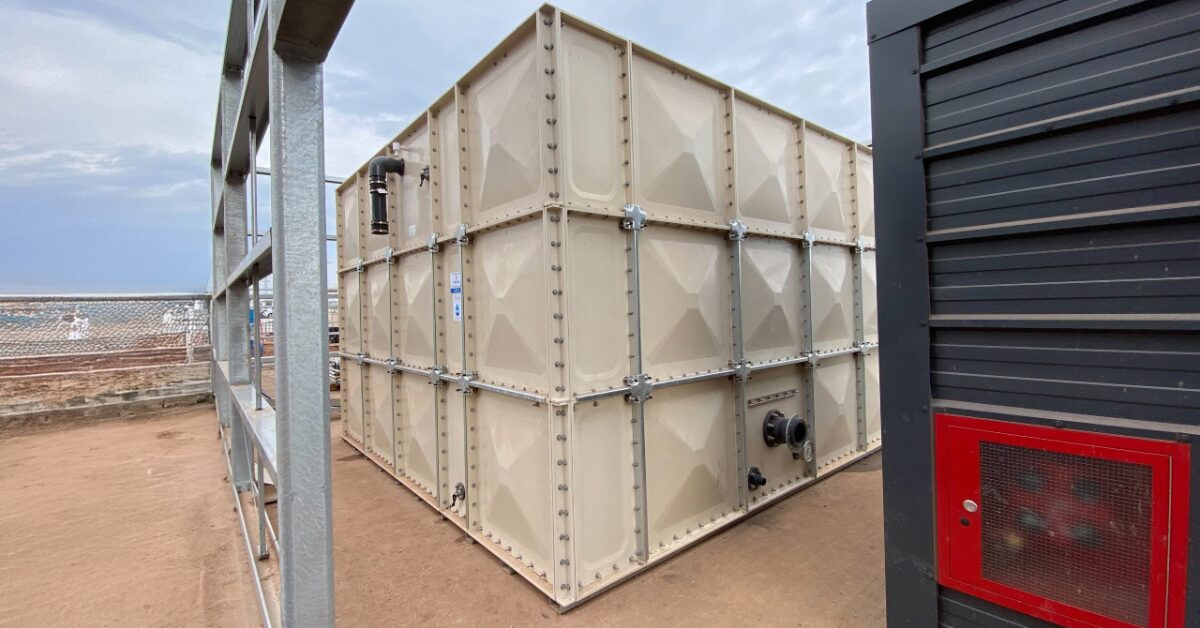
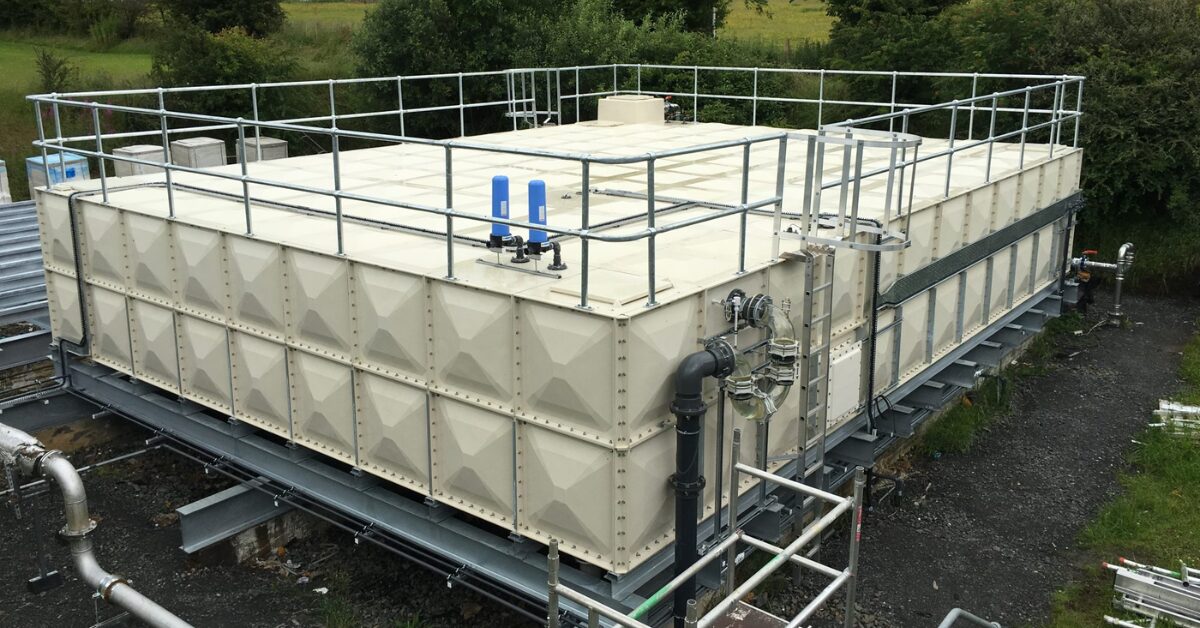
  • Used in larger residential buildings or plant rooms

Key Sizing and Site Planning Tips

As the installer, you don’t always choose the tank size—but you should always check:

  • Access to the tank location – Will a one-piece fit, or do you need a two-part?
  • Support base – Make sure there’s a level, load-bearing surface (especially in lofts)
  • Tank volume – Based on number of occupants and usage (standard is 100–250L per person)
  • Height clearance – Account for lid, fittings, insulation, and overflow pipes
  • Room for future maintenance – Leave space to remove the lid and access inside

Pro Tip: Always confirm the tank’s weight when full—especially for loft installations.

Installation Best Practices

Here are the key steps contractors should follow when installing residential cold water storage tanks:

  1. Base & Location
    • Use a strong, level base (timber board or concrete)
    • Avoid direct contact with sharp surfaces or debris
  2. Fittings & Connections
    • Use compression fittings or flanged outlets
    • Install screened overflow and warning pipes
    • Fit isolation valves on inlets and outlets for serviceability
  3. Hygiene Considerations
    • Use a WRAS-approved lid and fit a screened vent
    • Install in clean areas to avoid contamination
    • If for potable use, ensure it’s separated from any non-potable water
  4. Compliance Checks
    • Check AB air gap compliance if needed
    • Ensure the tank complies with Water Supply (Water Fittings) Regs 1999

Why Contractors Choose Tricel Cold Water Storage Tanks

Tricel is a trusted name for contractors across the UK when it comes to residential water storage. Here’s why:

  • Tanks are WRAS-approved and BS EN 13280 compliant
  • Fast turnaround times with UK-wide delivery
  • Range of sizes in one-piece, two-part, and sectional formats
  • Technical support for on-site queries or spec confirmation

We supply contractors working on:

  • Single dwellings
  • Housing developments
  • Apartment buildings
  • Domestic system upgrades

Getting the installation right the first time saves you from future callouts and keeps your project on time. Residential cold water storage tanks are straightforward to install when you choose the right size, plan the location properly, and follow the best practices.

Whether you’re fitting a tank in a tight loft space or specifying a system for a larger residential block, Tricel has the products and support to get the job done.

Read More...

  • Water Tank Installation & Maintenance
  • Cold Water Storage Tanks
  • Case Studies
Backflow Prevention

Backflow Prevention in Building Water Systems: Fluid Categories and Device Selection

April 29, 2026

A technical guide to backflow prevention under the Water Fittings Regulations — fluid categories 1 to 5, device types for cold water cisterns, the Type AG air gap requirement, and common compliance failures.

Confined Space Entry in Building Maintenance

Confined Space Entry in Building Maintenance: Obligations and Safe Systems

April 29, 2026

A practical guide to confined space entry obligations for building maintenance teams and contractors — covering the Confined Spaces Regulations 1997, permit to work, atmospheric testing, standby arrangements, and cold water tank entry.

Cold Water Tank Sizing

Cold Water Tank Sizing: How to Calculate Storage Volume for Multi-Storey Buildings

April 29, 2026

A technical guide to cold water tank sizing methodology for multi-storey buildings — covering demand estimation, resilience calculations, water age, Legionella risk, and a worked sizing example.

cold water system commissioning

Cold Water System Commissioning: Cleaning and Disinfection to BS EN 806-5

April 28, 2026

A practical guide to cold water system commissioning, cleaning, and disinfection in line with BS EN 806-5. Covers procedure, chlorination residuals, flushing, clearance for service, and handover documentation.

up