Fire supression systems
Home » Cold Water Storage Tanks » Fire Suppression Systems
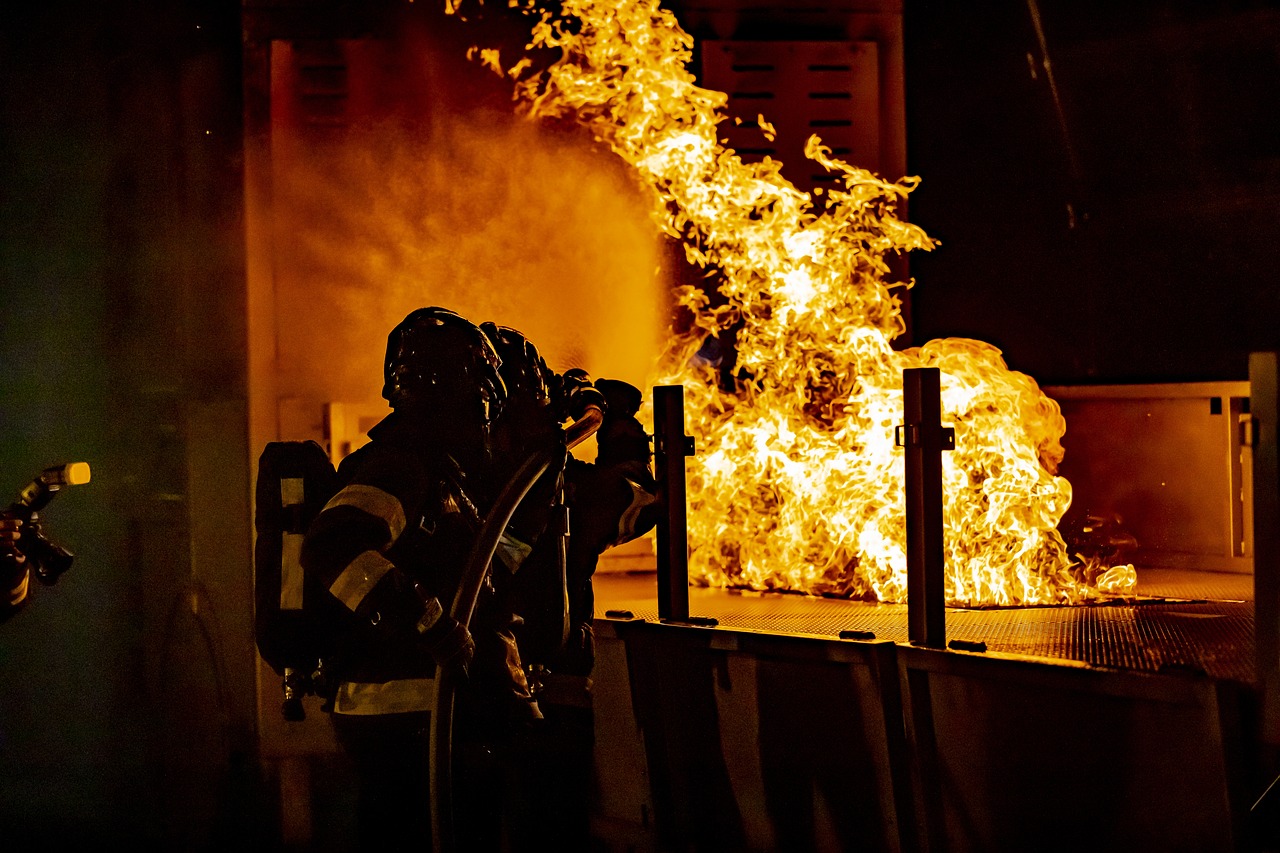
Fire suppression systems are rapidly becoming a critical form of fire protection in commercial and industrial settings. These systems safeguard valuable resources, facilities, and personnel, playing a key role in preventing disasters. Equipped with advanced components, they detect fires swiftly, activate alarms automatically, and shut down all equipment and power supplies to minimize potential damage.
Automatic fire supression system
We specialise in implementing modular fire suppression systems at facilities where supplying an extinguishing agent is not feasible. In addition, these systems are easy to install, with no complex setup required. Once our expert Tricel site crews conduct a thorough site survey, they will assess your specific needs and recommend the most effective fire protection solution.
Automatic fire suppression systems include components that detect heat and smoke, and they can also be manually activated if the automated system fails. The key advantage of these systems is their ability to operate without human intervention during a fire, which makes them especially valuable in situations where no personnel are on-site to trigger the system. As a result, commercial and industrial businesses in remote, hard-to-reach locations should strongly consider installing automatic fire suppression systems, including fire sprinkler tanks, to improve safety.
Furthermore, industrial plants that store flammable liquids or house significant amounts of electrical equipment can benefit from reduced insurance premiums by installing these systems. Insurance companies often view businesses with such preventative measures as lower risk, leading to more favorable terms.
Fire Sprinkler SYSTEMS
Fire suppression systems are the most sought-after and effective automatic system. They have an automatic feature triggered when a room reaches a specific temperature. Sprinkler systems have a network of pipes transporting water from the water tank to the sprinkler system.
Fire systems and sprinkler systems are each used as a method of suppressing and extinguishing fires. The difference between fire suppression systems and sprinkler systems is that fire suppression systems do not rely on water and are more suited to industrial environments where combustible gas or oils are used.
Sprinkler systems offer a distinct advantage by reaching restricted spaces as water is sprayed from the sprinklers, ensuring that even obstructed areas or objects are covered. However, traditional sprinkler systems are rarely used today because they cannot operate with water below 0°C, which could damage the pipes supplying the suppression system. Instead, dry fire sprinkler systems are preferred. These systems fill pipes with compressed air, which is released through the valves when needed.
To ensure proper functionality and compliance with fire safety regulations, it is crucial to have licensed and certified companies maintain sprinkler systems regularly. This ensures that all components meet the required standards.
water mist fire supression
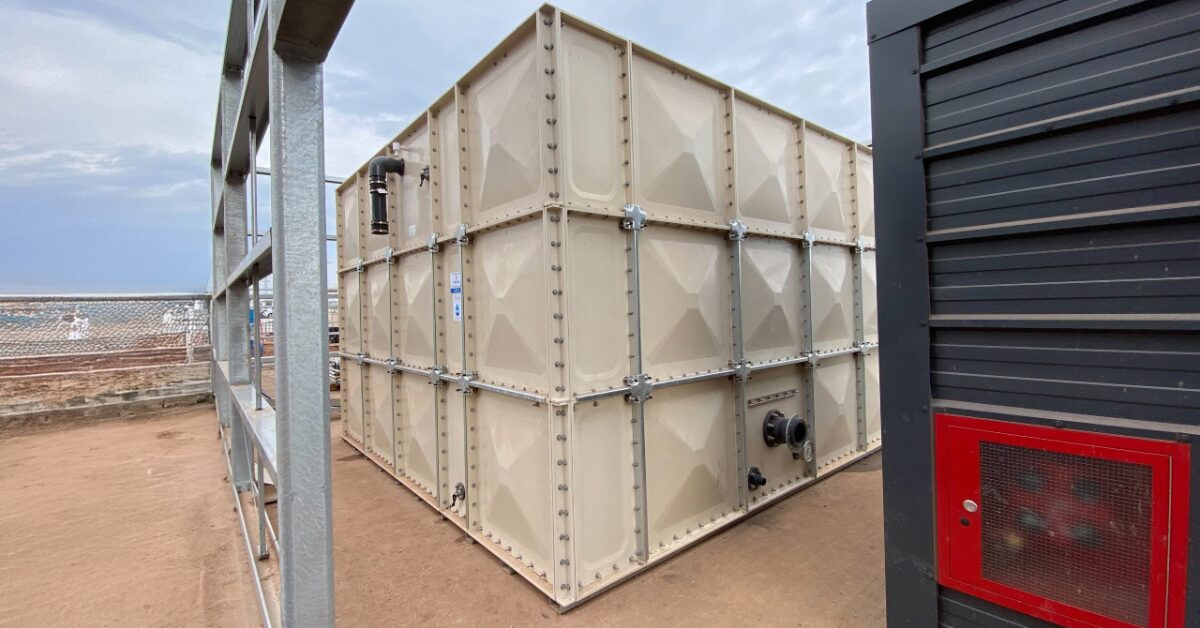
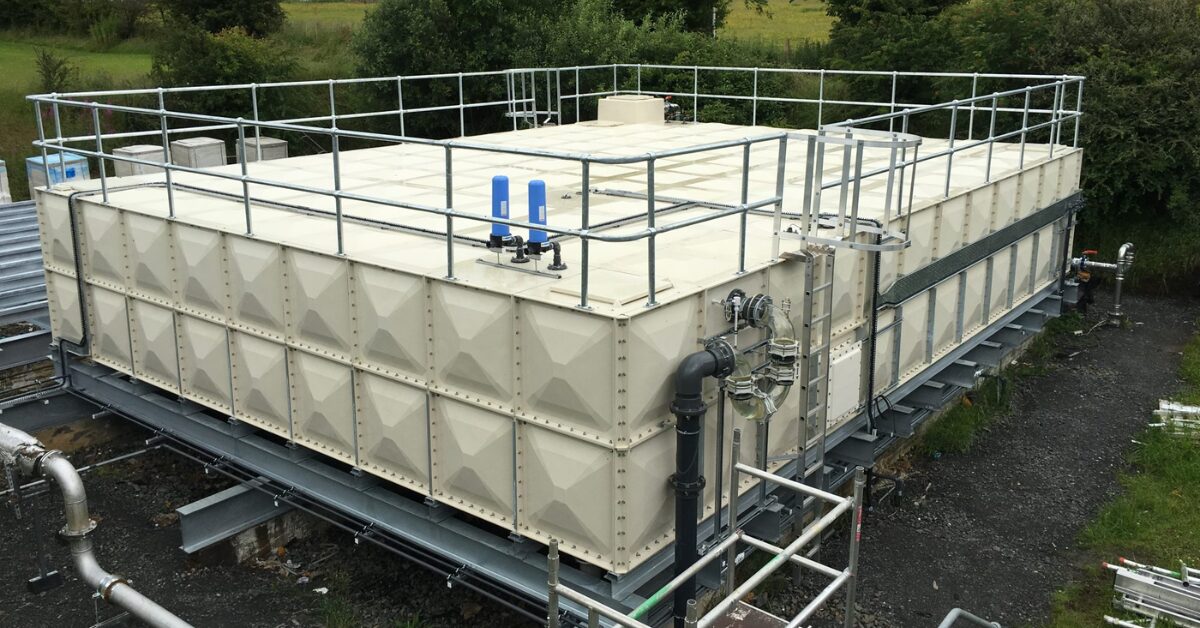
We supply misting water tanks that store the emergency water needed to support your water mist fire suppression system. With a misting system in place, you can eliminate concerns about water damage, as it minimizes that risk.
A key advantage of a water mist fire suppression system lies in its efficiency, which depends on water droplets turning into vapor. These tiny droplets absorb the fire’s heat and toxic gases, depriving the fire of oxygen and slowing its spread. Simultaneously, the droplets cool the flames, making misting systems a highly effective and reliable fire safety solution.
Read More...
- Water Tank Installation & Maintenance
- Cold Water Storage Tanks
- Case Studies

Cold Water Tank Sizing: How to Calculate Storage Volume for Multi-Storey Buildings
A technical guide to cold water tank sizing methodology for multi-storey buildings — covering demand estimation, resilience calculations, water age, Legionella risk, and a worked sizing example.
Confined Space Entry in Building Maintenance: Obligations and Safe Systems
A practical guide to confined space entry obligations for building maintenance teams and contractors — covering the Confined Spaces Regulations 1997, permit to work, atmospheric testing, standby arrangements, and cold water tank entry.
Backflow Prevention in Building Water Systems: Fluid Categories and Device Selection
A technical guide to backflow prevention under the Water Fittings Regulations — fluid categories 1 to 5, device types for cold water cisterns, the Type AG air gap requirement, and common compliance failures.
Cold Water System Commissioning: Cleaning and Disinfection to BS EN 806-5
A practical guide to cold water system commissioning, cleaning, and disinfection in line with BS EN 806-5. Covers procedure, chlorination residuals, flushing, clearance for service, and handover documentation.