Fire Sprinkler Tank Selection: A Guide for M&E Consultants

fire sprinkler tank selection

Choosing the Right Fire Sprinkler Tank for Your Project

As a Mechanical & Electrical (M&E) consultant, selecting the appropriate fire sprinkler tank is crucial for ensuring effective fire protection in any building project. This guide will walk you through the key considerations and factors to keep in mind when choosing a fire sprinkler tank.

Understanding Fire Sprinkler Tank Requirements

Regulatory Compliance

Ensure that your chosen tank complies with relevant standards and regulations, such as:

  • Loss Prevention Standard (LPS) 1276
  • BS EN 12845
  • BS 9251:2021 for domestic and residential buildings

Always consult with local fire authorities and insurers to confirm specific requirements for your project.

TANK CAPACITY & SIZING

The capacity of your fire sprinkler tank depends on several factors:

  • Building size and occupancy type
  • Duration of water supply required
  • Mains refill capabilities
  • Wet or dry pipe system
  • Range between highest and lowest sprinkler
  • Specific hazard classifications

Tricel offers tanks with capacities ranging from 5m³ to 1300m³, suitable for various project sizes.

Fire Sprinkler Tank Selection

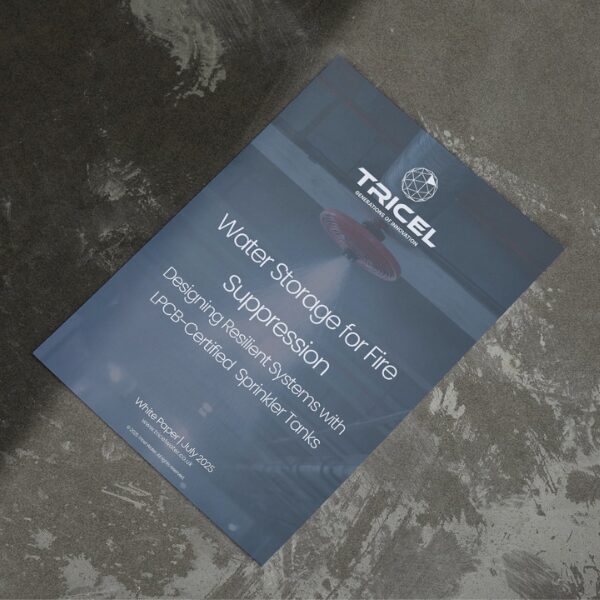
FEATURED WATER INDUSTRY WHITE PAPER

Water Storage for Fire Suppression | Designing Resilient Systems with LPCB-Certified Sprinkler Tanks

Stay ahead in fire safety with Tricel’s expert guide on water storage for fire suppression systems. This white paper covers key design considerations, compliance standards, and performance insights to help you specify and install reliable GRP tank solutions. Ideal for engineers, specifiers, and facility managers.

Tricel - Water Storage for Fire Suppression - White Paper - 2025

TANK MATERIAL & CONSTRUCTION

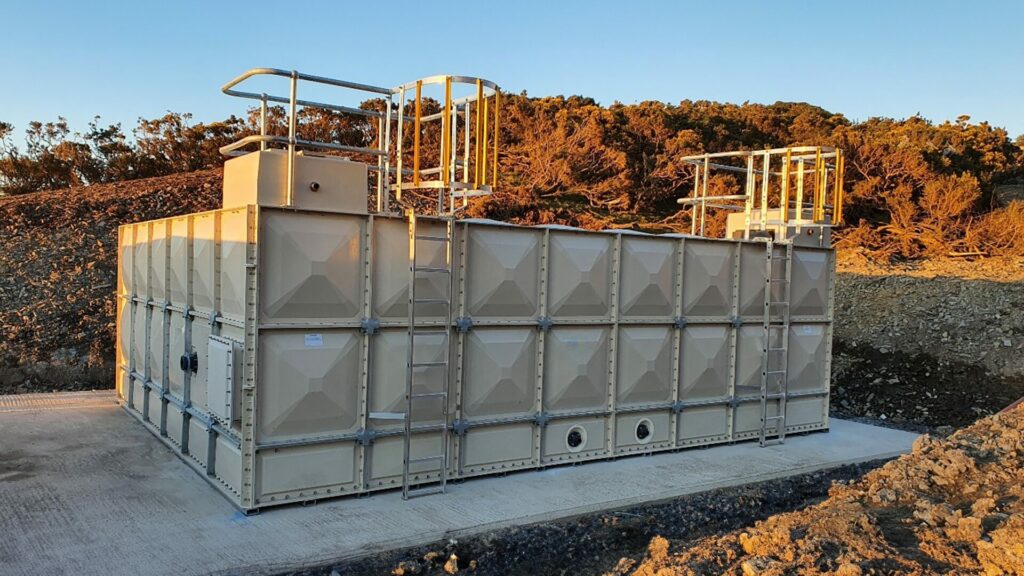
GRP (Glass Reinforced Plastic)

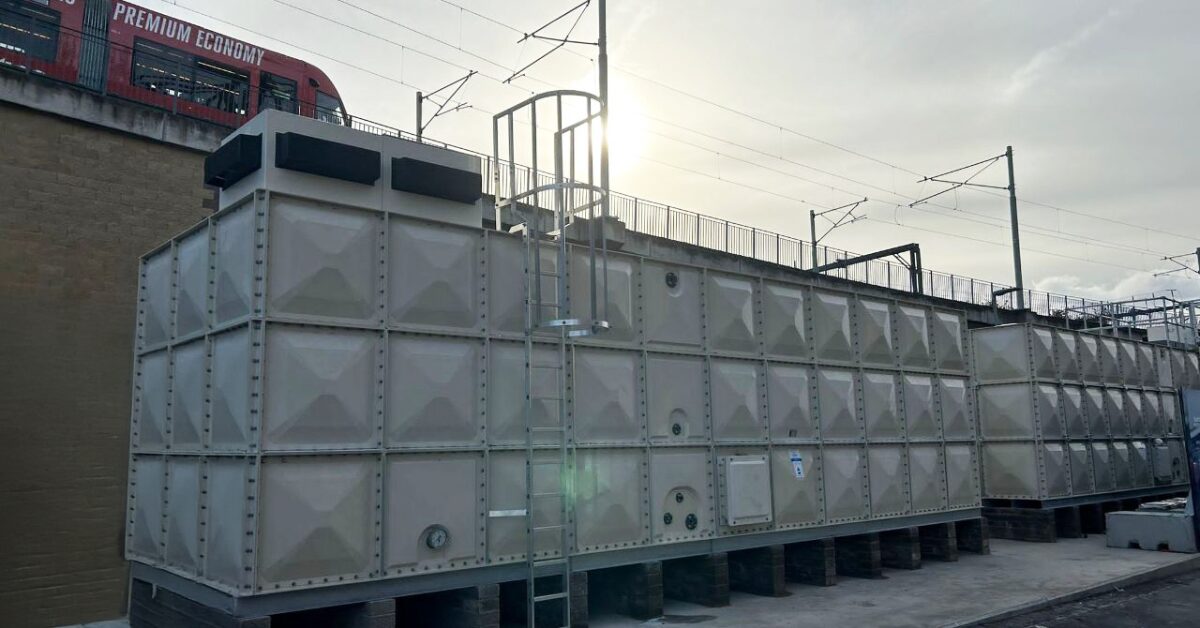
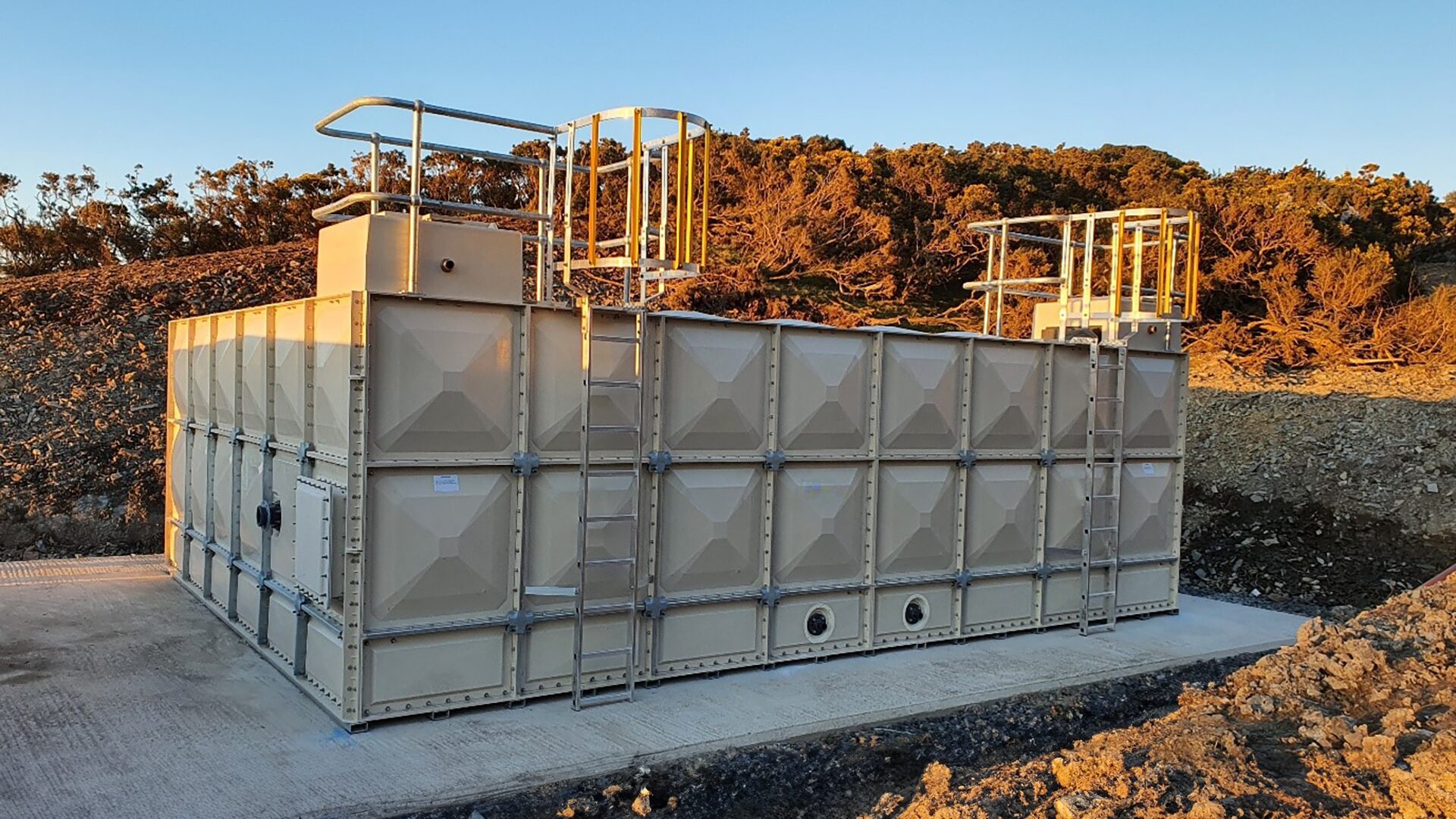
GRP is the preferred material for fire sprinkler tanks due to its durability, corrosion resistance, and low maintenance requirements. Tricel specializes in GRP water tanks that meet BS EN 13280 standards.

Sectional Design

Sectional tanks offer several advantages:

  • Easy transportation and on-site assembly
  • Flexibility in size and configuration
  • Suitable for both new construction and retrofit projects

KEY FEATURES TO CONSIDER

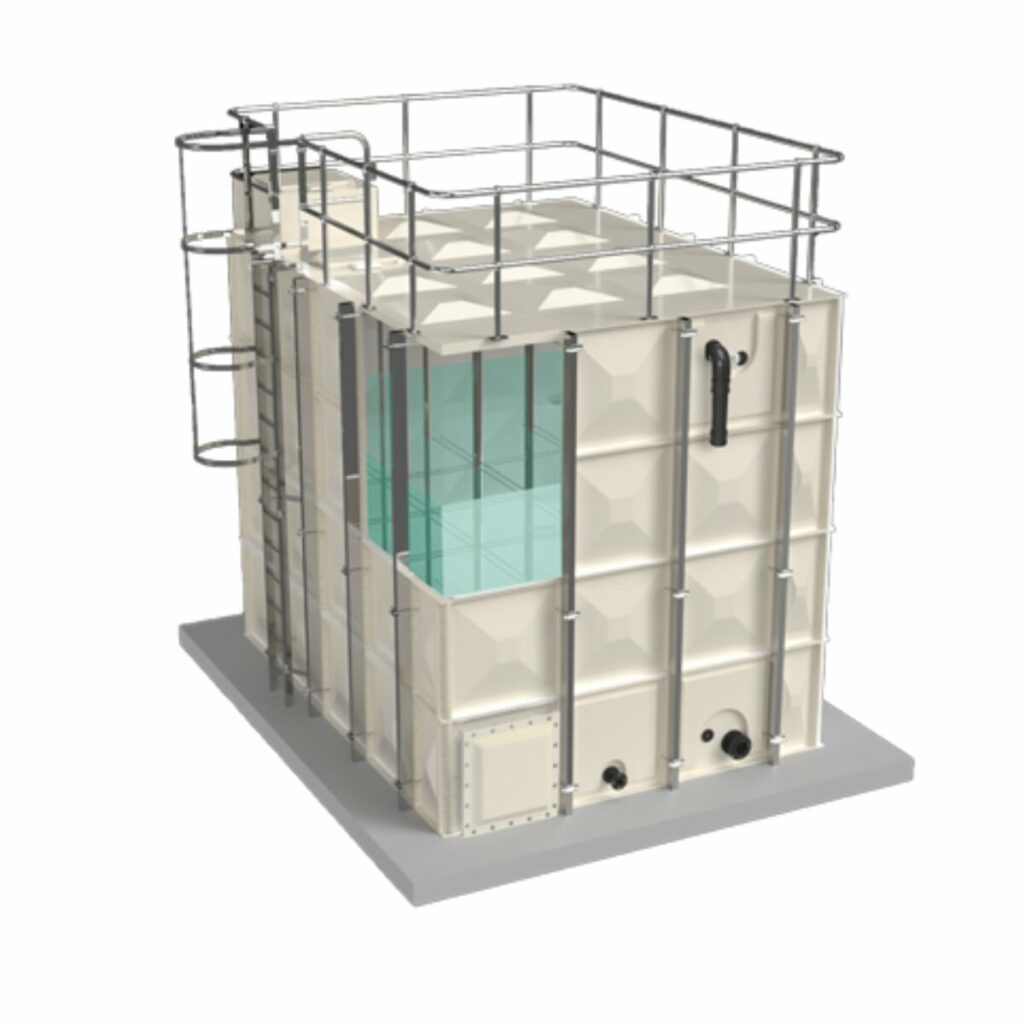
Fire Sprinkler Tank Selection: When selecting a fire sprinkler tank, look for the following features:

  1. LPCB Approval: Ensures the tank meets strict safety standards
  2. Vortex inhibitor: Required for proper system function.
  3. Access points: For maintenance and inspections.
  4. Self-draining base: Facilitates easier maintenance.
  5. Overflow and warning pipes: For system monitoring.
  6. Internal and external ladders: For safe access
Fire Sprinkler Tank Selection

INSTALLATION & MAINTENANCE

Easy Installation

Opt for tanks with modular designs that simplify the installation process, requiring only a flat surface

Minimal Maintenance

GRP tanks require minimal maintenance, reducing long-term costs and ensuring system reliability

Additional Considerations

  • Climate considerations: Ensure the tank can withstand local weather conditions.
  • Integration with existing systems: Verify compatibility with your fire suppression infrastructure.
  • Customisation options: Look for manufacturers offering tailored solutions to meet specific project needs
fire sprinkler tank selection

Fire Sprinkler Tank Selection: Choosing the right fire sprinkler tank is a critical decision that impacts the safety and compliance of your project. By considering factors such as regulatory requirements, capacity needs, material quality, and long-term maintenance, you can select a tank that provides optimal fire protection for your building and its occupants.

Remember to work closely with reputable manufacturers like Tricel, who offer LPCB-approved tanks and can provide expert guidance throughout the selection and installation process.

Read More...

  • Cold Water Storage Tanks
  • Product Guides & Comparisons
cold water system commissioning

Cold Water System Commissioning: Cleaning and Disinfection to BS EN 806-5

April 28, 2026

A practical guide to cold water system commissioning, cleaning, and disinfection in line with BS EN 806-5. Covers procedure, chlorination residuals, flushing, clearance for service, and handover documentation.

Legionella Risk Assessment for Building Water Systems A Practical Guide

Legionella Risk Assessment for Building Water Systems: A Practical Guide

April 24, 2026

This guide explains what a Legionella risk assessment is, who is legally required to conduct one, what it must cover, and how the written control scheme and documentation obligations follow from it. It focuses on cold water storage systems in multi-storey buildings - the context in which these obligations are most commonly misunderstood.

Break Tanks and Booster Sets

Break Tanks and Booster Sets: Design Guide for Multi-Storey and High-Rise Buildings

April 16, 2026

A technical design guide covering break tank and booster set selection, sizing, pressure zoning, compliance, and two-compartment arrangements for multi-storey buildings in the UK.

GRP Water Storage Tanks for UK Data Centres

GRP Water Storage Tanks for UK Data Centres: Reliable, Compliant, and Fast to Install 

March 26, 2026

When uptime and compliance matter, material choice is strategic. GRP tanks offer a compelling balance of lifecycle cost, corrosion resistance, hygiene, and rapid modular installation - backed by UK approvals for potable and firewater use. Here’s how GRP compares, plus a real world case study and a procurement checklist.