Water Resources and Environmental Destination Framework: 2026 Policy and Practice
Home » Water Industry Insights & Innovations » Water Resources and Environmental Destination Framework: 2026 Policy and Practice
The Environmental Destination Framework:
By 2050, the UK may need to reduce water abstraction by up to 5,400 million litres per day to meet environmental commitments. The Environment Agency’s Environmental Destination Framework, regional water resource plans, and record infrastructure investment in AMP8 are driving a new era of sustainable, climate-adapted water management.
Water Resources and Environmental Destination: 2026 Policy and Practice
The United Kingdom is entering a critical era for water resource management. Once considered a nation of abundant rainfall, the UK now faces mounting challenges from climate change, population growth, and the demands of industrial decarbonisation. In response, the Environment Agency’s Environmental Destination framework is fundamentally reshaping how water resources are planned, protected, and delivered. As we approach 2026, new policy, technical guidance, and regional planning are converging to create a more resilient, sustainable water future.
This article provides a comprehensive overview of the Environmental Destination framework, the latest policy and practice for 2026, and the economic, technical, and societal implications for the UK’s water sector. Drawing on the most recent government reports, industry forecasts, and expert analysis, it offers actionable insights for water professionals, policymakers, and businesses seeking to navigate the evolving landscape of water resilience.
Download the full, “Water Scarcity in the UK: Risks and Resilience” white paper to explore these topics in detail and prepare your organisation for the future of water management.
Water Resources and Environmental Destination: 2026 Policy and Practice
The Environment Agency’s Environmental Destination framework is at the heart of the UK’s strategy for sustainable water management. This approach is designed to ensure that water abstraction, the process of taking water from natural sources for human use, remains within environmentally sustainable limits, both now and in the future.
“The Environmental Destination for Water Resources identifies where, and by how much, water abstraction needs to change to achieve and maintain a healthy water environment, both now and in the future.”
– Environment Agency, 2025
Five Guiding Principles for Sustainable Water Planning
The Environmental Destination framework is built on five core principles, each of which is essential for effective, future-proofed water resource management:
1. Understand Long-Term Environmental Requirements:
Water resource planning must be based on a clear understanding of where and by how much abstraction needs to change to meet all legal and policy commitments for environmental protection. This includes the requirements of the Water Framework Directive, Habitats Regulations, and government strategies for biodiversity and river restoration.
2. Account for a Changing Climate:
Climate change is already altering the UK’s hydrology. The framework integrates a range of predicted climate impacts – such as reduced summer rainfall, more frequent droughts, and increased flood risk – into all planning scenarios. As the Environment Agency notes, “The impact of climate change (which could see summer flows in the 2050s reduced in England by up to 33%) and predicted increases in water use demands mean that additional action is likely to be required.”
3. Plan for the Full Range of Environmental Requirements:
Long-term plans must consider not only current regulatory requirements but also the full spectrum of government commitments for the water environment. This ensures that future risks are addressed proactively, rather than reactively.
4. Use Best Available Evidence:
Planning is grounded in robust national datasets, which are continually refined with local data, detailed modelling, and stakeholder input. “Planning for the environment is based on best available data and evidence using nationally derived datasets as a starting point, and subsequently improved with local information,” the Agency explains.
5. Consider Local Priorities:
The framework recognises that local priorities and stakeholder engagement are vital. “Delivery to meet environmental requirements can be informed by stakeholder priorities, where consistent with statutory requirements,” the Agency states. This allows for flexibility in the pace and focus of delivery, maximising both environmental and societal benefits.
Water Scarcity in the UK: Risks & Resiliance
Why the Environmental Destination Matters: The Scale of the Challenge
The Environmental Destination framework is not just a technical exercise—it is a response to urgent, real-world pressures. By 2050, up to 5,400 million litres per day (Ml/d) of abstraction reductions may be needed to meet environmental commitments, a significant increase from the current baseline of 3,200 Ml/d. This challenge is driven by three main factors:
Unsustainable Abstraction:
Currently, 60% of the total challenge is due to unsustainable abstraction, where water is being taken from rivers, lakes, and aquifers at rates that damage ecosystems.
Climate Change:
Climate change accounts for 30% of the challenge, as it reduces natural river flows, increases drought severity, and makes groundwater reserves more vulnerable. The Environment Agency warns, “Climate change is fundamentally altering the hydrological landscape of the United Kingdom… These changes are not only affecting the availability of water but also the reliability of infrastructure and the ecological integrity of river systems.”
Full Government Commitments:
Meeting the full range of government commitments for environmental protection adds another 10% to the challenge, reflecting the ambition to restore and enhance the UK’s water environment.
2026: Regional Water Resource Plans and New Technical Guidance
The year 2026 marks a turning point for water resource planning in the UK. Regional water resource plans are being refined with updated guidance and technical support from the Environment Agency. These plans are required to:
- Embed the Environmental Destination principles in all aspects of planning and delivery.
- Address both current unsustainable abstraction and future pressures from climate change, population growth, and industrial demand.
- Integrate local priorities and stakeholder feedback into the pace and focus of delivery.
“Regional water resource plans are being refined in 2026, with new guidance and technical support.”
The National Framework for Water Resources 2025 sets out the ambition for a sustainable abstraction regime and a protected, improved water environment. It identifies the need for up to 5 billion litres per day of additional water by 2055 for public supply alone, with further demand from energy, food, and data centre sectors.
Key Facts and Figures: The Data Behind the Policy
- Abstraction Reductions:
Up to 5,400 Ml/d by 2050 to meet full environmental requirements (Environment Agency, 2025).
- Current Challenge:
60% of the total challenge is unsustainable abstraction; 30% is climate change; 10% is meeting full government commitments.
- Population Growth:
England’s population is projected to exceed 71 million by 2055, concentrating demand in already water-stressed regions.
- Industrial Demand:
Net-zero initiatives could add up to 860 million litres per day in water use by 2050, particularly from hydrogen production and carbon capture.
- Infrastructure Investment:
£104 billion planned by water companies in AMP8 (2025–2030), including £44 billion for new infrastructure and resources.
- Construction Sector:
Construction output is forecast to grow by 1.1% in 2025 and 2.8% in 2026, with infrastructure output rising by 2.6% in 2025 and 3.9% in 2026.
Climate Adaptation: Responding to a Changing Hydrological Landscape
Climate change is already impacting the UK’s water resources. The summer of 2022 saw record temperatures and the driest conditions since 1995. The Environment Agency highlights that “the UK’s top 10 warmest years since records began have all occurred in the last two decades.” By the 2050s, summer rainfall in England is expected to decline by 15%, with more frequent and intense droughts and floods.
Hydrological modelling confirms that southern and eastern regions of England are most vulnerable to future reductions in river flow and prolonged drought conditions. “Hydrological modelling conducted under the CS-N0W programme… reveals that river flows across England are projected to decline significantly under future climate scenarios,” the Tricel Water Scarcity Whitepaper notes.
The effects of climate change are not limited to water quantity. Reduced river flows can impair cooling systems in power stations, limit irrigation for crops, and increase the risk of saline intrusion into coastal aquifers. These interdependencies create systemic vulnerabilities that must be addressed through integrated, risk-based water resource planning.
Local Priorities and Stakeholder Engagement
The Environmental Destination framework places a strong emphasis on local priorities and stakeholder engagement. This is not just a matter of process – it is essential for effective, equitable water management.
“Delivery to meet environmental requirements can be informed by local stakeholder priorities, where consistent with statutory requirements… The value of the different aspects of the environment might be perceived differently across England – regions might prioritise waterbodies differently depending on local circumstances and the value of that habitat to the region.”
– Environment Agency, 2025
Regional water resource plans are expected to reflect the unique needs and values of communities, whether that means prioritising salmon rivers, chalk streams, or urban water resilience. The pace of delivery can be adjusted to maximise environmental and societal benefits, provided statutory requirements are met.
The Role of Tricel: Supporting Decentralised Resilience
As the UK confronts mounting pressures on its water infrastructure, decentralised and durable solutions are increasingly vital. Tricel delivers modular water storage, pumping, stormwater management, and wastewater treatment systems – supporting decentralised resilience and regulatory compliance.
Tricel’s integrated water systems are engineered for reliability, compliance, and adaptability across varied site conditions, supporting both decentralised and large-scale infrastructure needs. These solutions are essential for building resilience in the face of climate change, population growth, and evolving regulatory requirements.
To gain deeper insights into the risks, strategies, and solutions for UK water scarcity, we encourage you to download the UK Water Shortage 2050 Whitepaper, and equip your organization with the knowledge to drive water resilience forward.
Policy in Practice: How the Environmental Destination Framework is Being Implemented
Regional Water Resource Plans
Regional water resource plans are at the forefront of implementing the Environmental Destination framework. These plans are developed by regional groups, water companies, and stakeholders, and are required to:
- Assess the full range of environmental requirements, including legal obligations and government commitments.
- Integrate climate change projections and scenario modelling.
- Identify solutions for sustainable abstraction, demand management, and new supply options.
- Engage with local stakeholders to ensure that plans reflect regional priorities and values.
The Environment Agency provides technical guidance and support to ensure that regional plans are robust, evidence-based, and aligned with national policy.
Technical Innovations and Best Practice
The Environmental Destination framework encourages the use of best available evidence and technical innovation. This includes:
- Advanced hydrological modelling to predict future river flows and groundwater recharge.
- Scenario-based planning to assess the impacts of different climate, growth, and policy pathways.
- Integration of nature-based solutions, such as wetland restoration and sustainable drainage systems, to enhance water resilience.
- Use of smart metering, leakage detection, and water efficiency technologies to reduce demand and improve supply reliability.
The Future of Water Resources: Risks, Opportunities, and Next Steps
Risks and Challenges
The path to a sustainable water future is not without risks. Key challenges include:
- Climate Uncertainty: The pace and severity of climate change impacts are difficult to predict, requiring adaptive, flexible planning.
- Population and Economic Growth: Rising demand for water in homes, agriculture, industry, and energy production increases pressure on already-stressed resources.
- Infrastructure Vulnerabilities: Ageing assets, high leakage rates, and limited interregional transfer capacity expose systemic weaknesses.
- Regulatory and Policy Complexity: Navigating the evolving landscape of environmental regulation, planning policy, and stakeholder expectations requires ongoing coordination and investment.
Opportunities and Solutions
Despite these challenges, there are significant opportunities for innovation and improvement:
- Integrated Planning: The Environmental Destination framework provides a blueprint for integrated, cross-sectoral water management.
- Investment in Resilience: Record investment in AMP8 and beyond will drive the development of new infrastructure, technologies, and nature-based solutions.
- Decentralised Systems: Modular, decentralised solutions—such as those provided by Tricel—offer flexibility, scalability, and resilience for both public and private sectors.
- Stakeholder Engagement: Ongoing engagement with communities, businesses, and regulators ensures that plans are responsive, equitable, and effective.
Conclusion: Towards a Resilient, Sustainable Water Future
The UK’s water future depends on bold policy, robust planning, and the integration of local and national priorities. The Environmental Destination framework, regional water resource plans, and record infrastructure investment are setting the stage for a resilient, sustainable water environment by 2026 and beyond.
As the Environment Agency concludes, “Taking a proactive long-term approach to environmental water planning and forecasting where abstraction will need to change is much more cost effective than waiting until negative impacts happen… The cost of inaction could be almost double that of building resilience over the next 30 years.”
Frequently Asked Questions
It’s the Environment Agency’s approach to identifying where and by how much water abstraction must change to achieve a healthy water environment, integrating climate adaptation and local priorities.
To meet legal and policy commitments for environmental protection, address climate change impacts, and ensure sustainable water supplies for a growing population and economy.
Long-term environmental needs, climate adaptation, full environmental requirements, best available evidence, and local priorities.
Climate change is reducing river flows, increasing drought and flood risks, and making groundwater reserves more vulnerable, especially in southern and eastern England.
AMP8 is the 2025–2030 investment period for water companies, with £104 billion planned for new infrastructure, leakage reduction, and water quality improvements.
Tricel provides modular water storage, pumping, stormwater management, and wastewater treatment systems, supporting decentralised resilience and compliance with new regulations.
Sources
- Environment Agency. “Principles for protecting the water environment in water resources planning.” July 2025.
- Environment Agency. “Developing the revised Environmental Destination figures: technical report.” June 2025.
- Environment Agency. “National Framework for Water Resources 2025: Summary Document.”
- Tricel. “Water Scarcity in the UK: Risks and Resilience White Paper.” November 2025.
- Construction Products Association. “Construction Industry Forecasts Autumn 2025.”
- Office for National Statistics. “Construction output in Great Britain: September 2025.”
Read More...
- Water Tank Installation & Maintenance
- Cold Water Storage Tanks
- Case Studies

Cold Water Storage Tank Compliance in the UK: Regulations, Standards & Best Practices
Ensuring compliance with cold water storage tank regulations in the UK is essential for safeguarding water quality, maintaining system efficiency, and meeting legal obligations. From WRAS approval and LPCB certification to industry standards such as BS EN 13280, strict requirements govern the design, installation, and maintenance of water tanks.
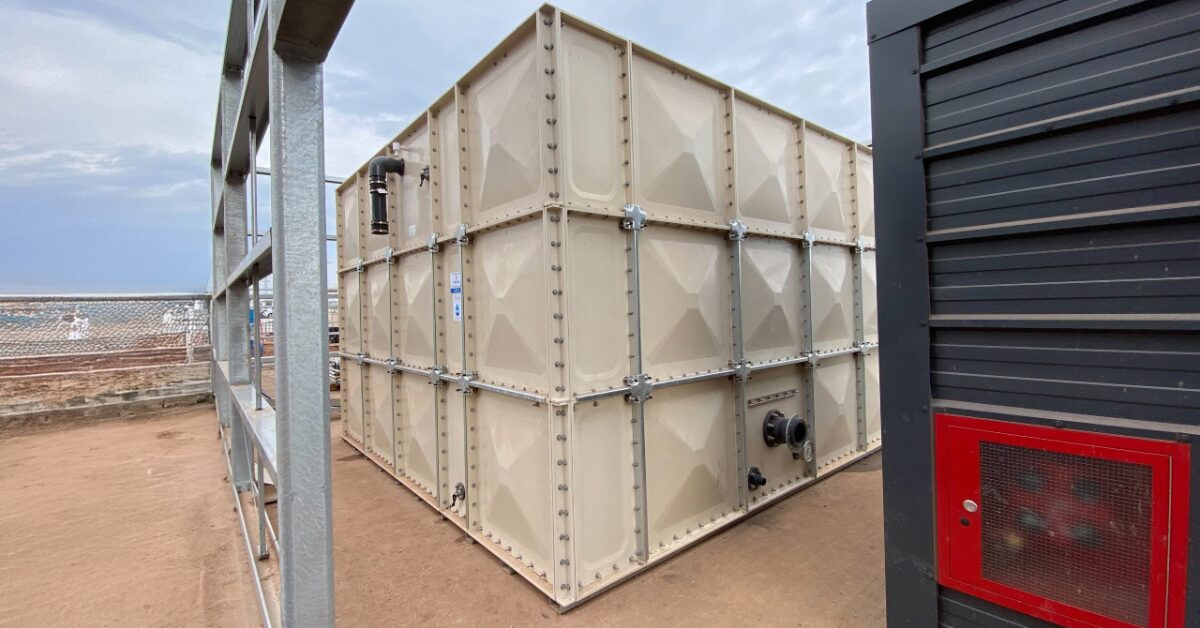
How to Maintain a Compliant Cold Water Storage Tank
Maintaining a cold water storage tank is not just about ensuring a reliable water supplyit is also a legal and safety requirement. A poorly maintained tank can pose serious risks, including bacterial growth such as Legionella, structural deterioration, or non-compliance with current regulations.

Leak in Water Tank: Causes, Prevention, and Solutions
Water tank leaks can lead to significant structural damage and water loss. Common causes include corrosion, poor installation, and lack of maintenance. To prevent leaks, it's essential to ensure proper installation, use high-quality materials, and conduct regular inspections. For detailed guidance on causes, prevention, and solutions for water tank leaks, refer to Tricel Water UK's comprehensive article.
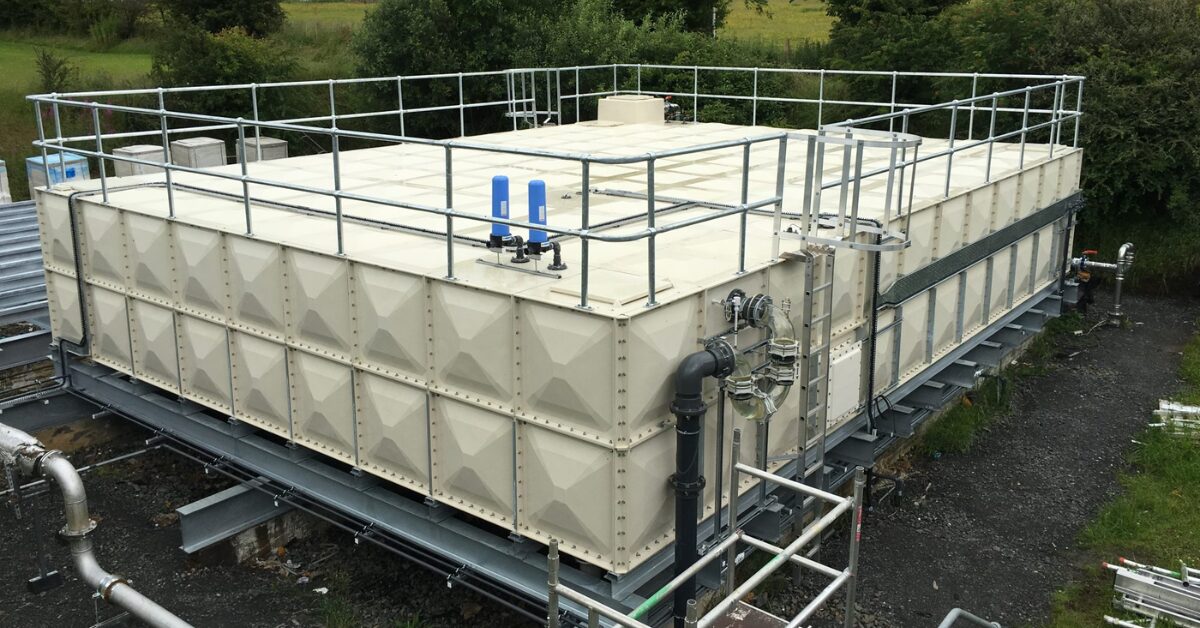
Importance of Base Levelling Steels
Proper base levelling is essential for the stability and longevity of your water tank. This guide explains why base levelling steels are crucial for preventing structural issues and ensuring your tank performs optimally over time.