WRAS Approval vs. Regulation 4 (Reg4) Certification for Water Tanks: What’s Legally Required - and What Proves It
Home » Water Regulation » WRAS vs Reg4 Certification for Water Tanks: Legal Requirements & Compliance Guide
Ensuring potable water safety in the UK hinges on compliance with the Water Supply (Water Fittings) Regulations 1999. For water tanks and their components, Regulation 4 is the legal benchmark; WRAS Approval and Reg4 certifications (e.g., NSF REG4, Kiwa KUKreg4) are voluntary routes used to demonstrate that a product meets those legal requirements. In practice, UK water authorities accept either route as valid evidence, provided the product has been tested against the same underlying standards (e.g., BS 6920 and relevant regulator specifications)
1) The Legal Foundation: What Regulation 4 Requires
Regulation 4 states that every water fitting “shall be of an appropriate quality and standard” and “suitable for the circumstances in which it is used.” This requirement covers tanks as finished assemblies and the materials/components used within them (e.g., coatings, seals, valves). Installing noncompliant fittings can trigger enforcement by water undertakers and constitutes a criminal offence.
To evidence compliance, dutyholders (manufacturers, installers, specifiers) may rely on multiple forms of documentation—including independent test reports and certifications from recognized schemes such as WRAS, NSF REG4, or Kiwa KUKreg4. Water undertakers can consider such documentation when assessing Regulation 4(1)(a) (quality and standard) compliance.
2) WRAS Approval: The Historic Pathway (Voluntary, Not Mandatory)
The Water Regulations Approval Scheme (WRAS) has long been the most familiar mark in UK plumbing specifications. It is a voluntary product approval that confirms compliance with Regulation 4 through thirdparty testing and a review by the Product Approvals Advisory Group (PAAG), which typically meets on a 4–6week cycle. This cadence can extend total approval time.
WRAS’s popularity stems from history and market familiarity, not legal necessity. Today, WRAS decisions are made independently of water companies; its role is one of recognized, independent evidence of Reg4 compliance—useful and widely specified, but not the only acceptable proof.
Validity: WRAS approvals are typically issued for five years, after which products require reassessment—an interval aligned with other leading schemes.
3) Reg4 Certification via NSF or Kiwa KUKreg4: Direct to the Legal Requirement
NSF REG4 and Kiwa KUKreg4 are certification schemes that test products directly against the requirements underpinning Regulation 4—most notably BS 6920 for materials in contact with drinking water, plus applicable mechanical and hygiene criteria. Because much of the testing occurs inhouse (e.g., NSF laboratories in the UK), lead times are often shorter than the traditional WRAS route.
Both NSF and Kiwa position their Reg4 schemes as equally robust and widely accepted by UK water authorities. Industry guidance and commentary confirm that KUKreg4 provides the same level of compliance evidence as WRAS, since the test bases and acceptance principles align to Regulation 4.
Validity: Like WRAS, Reg4 certificates commonly run on a fiveyear cycle
4) What This Means for Water Tanks
Whether you choose WRAS or NSF/Kiwa Reg4, tanks must show that:
1. Materials are safe for contact with drinking water (BS 6920):
Nonmetallic components (liners, gaskets, elastomers, coatings) must not affect taste or odour, promote microbial growth, or leach harmful substances. This is a foundational requirement for both WRAS and Reg4 schemes.
2.The assembly prevents contamination and backflow:
Certification examines design elements and specified devices to ensure tanks do not compromise the supply.
3.Components are fit for purpose and suitable for the installation conditions:
Mechanical integrity, pressure/temperature suitability, and hygiene controls are assessed under both routes.
Bottom line: For tanks, WRAS Approval and NSF/Kiwa Reg4 certification are accepted as equivalent evidence that the product complies with the legal requirement—Regulation 4.
5) How to Choose: Practical Considerations
Choose WRAS
if your project explicitly requires the WRAS name or if stakeholder familiarity makes this the smoother path to specification acceptance.
Choose NSF/Kiwa Reg4
if you need a faster or more streamlined route. Inhouse testing and singlebody certification can reduce time by roughly 4–6 weeks, depending on product scope and lab capacity.
In either case, ensure your tank’s bill of materials (elastomers, coatings, fittings) and assembled unit are covered within the certification scope, and keep certificates current within their fiveyear validity window.
6) Common Misconceptions (and the Facts)
Misconception 1: “WRAS is legally required.”
Fact: The legal requirement is Regulation 4; WRAS is a voluntary approval used to demonstrate compliance. Equivalent Reg4 certifications (NSF/Kiwa) are also accepted by water authorities.
Misconception 2: “Only WRAS is accepted by water companies.”
Fact: Water undertakers assess Regulation 4 compliance and accept credible evidence (including NSF REG4 and Kiwa KUKreg4 certificates) that a product meets the standard.
Misconception 3: “WRAS and Reg4 test to different standards.”
Fact: Both pathways rely on BS 6920 for materials and applicable performance criteria set out for Reg4—so the underlying technical tests are aligned, even if the administrative processes differ.
Misconception 4: “WRAS is always faster.”
Fact: WRAS includes PAAG review cycles, which can lengthen timelines; NSF/Kiwa often deliver faster turnarounds through inhouse testing and certification.
Misconception 5: “Zip Water/industry talking points are out of date—WRAS is still the only game in town.”
Fact: Industry guidance now routinely references multiple accepted certification bodies (WRAS, NSF, Kiwa) for demonstrating Reg4 compliance, reflecting the current acceptance landscape.
7) Quick Comparison
Features
WRAS
Reg4 (NSF/Kiwa)
8) Practical Takeaways for Specifiers and Installers
- Specify Regulation 4 compliance as the nonnegotiable legal baseline; then name WRAS or NSF/Kiwa Reg4 as acceptable evidence.
- For timecritical projects, consider NSF REG4 or Kiwa KUKreg4 to shorten approval timelines without compromising rigour.
- Verify scope and components: ensure the certificate covers the full tank assembly (materials, coatings, seals, valves) and keep documentation accessible for water undertakers.
Read More...
- Water Tank Installation & Maintenance
- Cold Water Storage Tanks
- Case Studies

Cold Water Storage Tank Compliance in the UK: Regulations, Standards & Best Practices
Ensuring compliance with cold water storage tank regulations in the UK is essential for safeguarding water quality, maintaining system efficiency, and meeting legal obligations. From WRAS approval and LPCB certification to industry standards such as BS EN 13280, strict requirements govern the design, installation, and maintenance of water tanks.
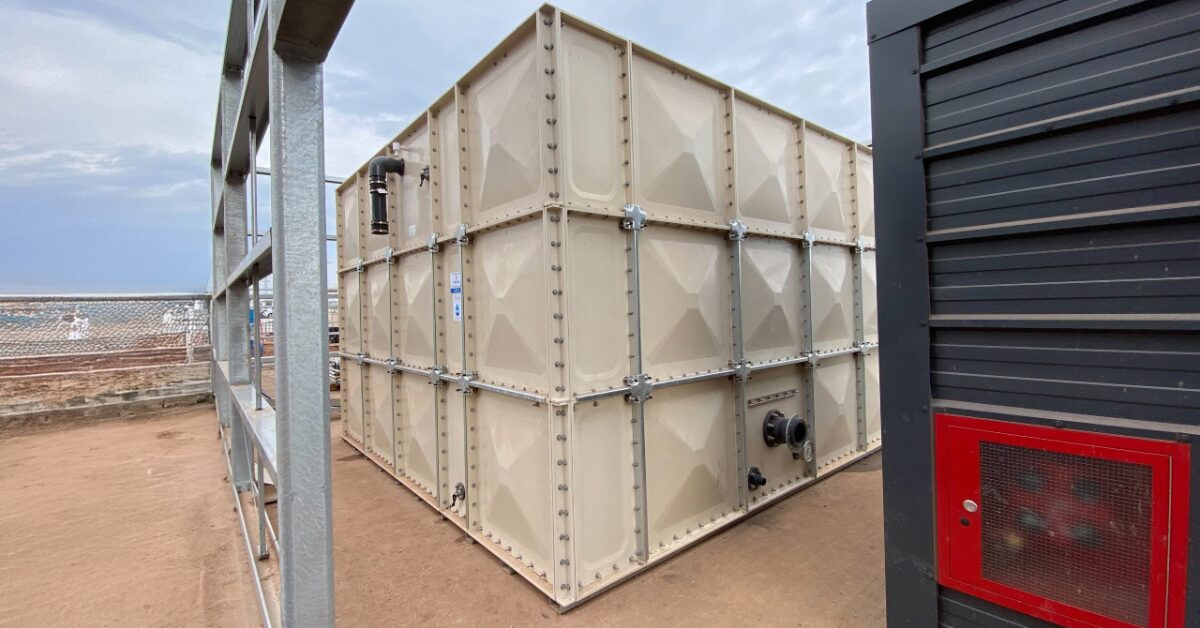
How to Maintain a Compliant Cold Water Storage Tank
Maintaining a cold water storage tank is not just about ensuring a reliable water supplyit is also a legal and safety requirement. A poorly maintained tank can pose serious risks, including bacterial growth such as Legionella, structural deterioration, or non-compliance with current regulations.

Leak in Water Tank: Causes, Prevention, and Solutions
Water tank leaks can lead to significant structural damage and water loss. Common causes include corrosion, poor installation, and lack of maintenance. To prevent leaks, it's essential to ensure proper installation, use high-quality materials, and conduct regular inspections. For detailed guidance on causes, prevention, and solutions for water tank leaks, refer to Tricel Water UK's comprehensive article.
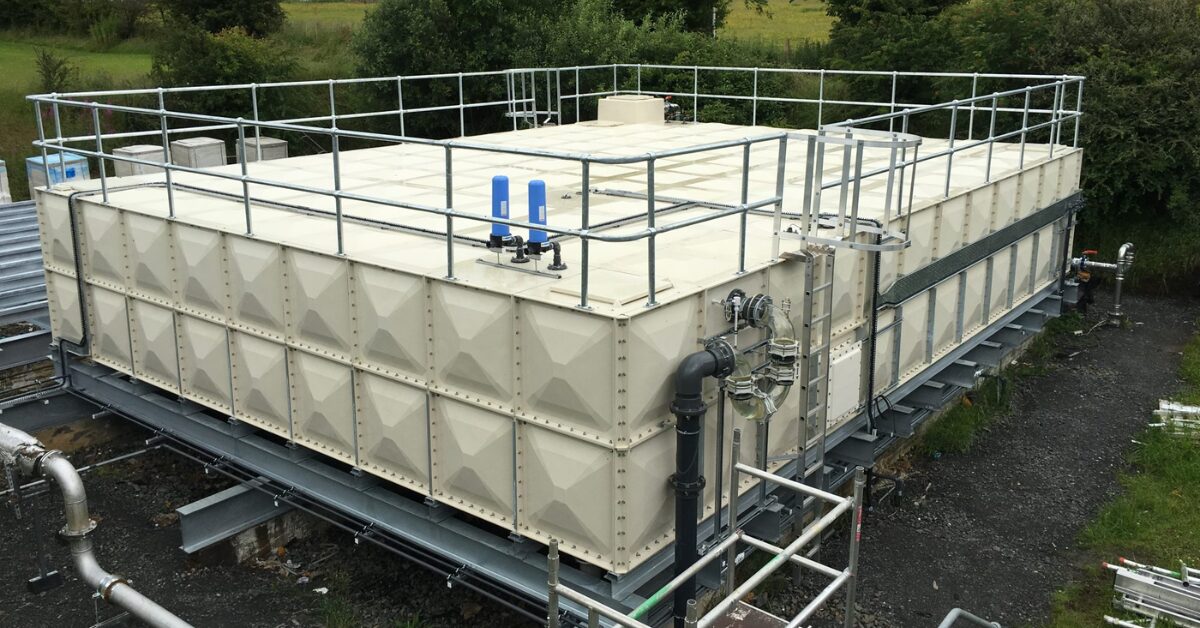
Importance of Base Levelling Steels
Proper base levelling is essential for the stability and longevity of your water tank. This guide explains why base levelling steels are crucial for preventing structural issues and ensuring your tank performs optimally over time.