UK Construction Market Outlook 2026: Navigating Uncertainty, Finding Opportunity

UK construction market 2026

2026 UK Construction Market Outlook:

2026 brings cautious optimism for the UK construction sector, with output forecast to grow by 2.8%. Infrastructure and industrial construction are set to lead the recovery, while private housing and commercial sectors face ongoing headwinds. Explore what this means for Tricel Water UK, its customers, and project partners. 

UK Construction Market Outlook 2026: Navigating Uncertainty, Finding Opportunity

The UK construction sector enters 2026 with a sense of cautious optimism, following several years of economic turbulence, shifting policy, and evolving market demand. The industry is forecast to grow by 2.8% in 2026, a notable improvement from the modest 1.1% growth expected in 2025. This recovery is not uniform: infrastructure and industrial construction are set to lead the way, while private housing and commercial new build remain subdued, challenged by persistent economic uncertainty, tax changes, and fragile consumer confidence 

For Tricel Water UK and our partners, understanding these nuanced trends is essential for strategic planning, risk management, and project delivery – especially in the water, infrastructure, and environmental sectors where regulatory and sustainability drivers are intensifying.

Key Market Forecasts for 2026

Total construction output: +2.8% (2026 forecast) 

Infrastructure output: +3.9% 

Industrial output: +2.6% 

Private housing output: +4.0% (from a low base) 

Commercial output: +2.3% (after a -1.9% dip in 2025) 

Risks: Further tax rises, project delays, skills shortages, and subdued consumer confidence. 

“The only clear certainty remains uncertainty. Key niches of construction growth remain, which will benefit some construction supply chains. However, other sectors are increasingly looking as though they will have to wait for a sustained recovery next year.” 


Construction Products Association, Autumn 2025 

Sector Trends & Opportunities

Infrastructure: The Engine of Growth

Infrastructure is forecast to outperform all other sectors, with output rising by 3.9% in 2026. This growth is underpinned by:

Energy and water investment: Major upgrades to the electricity grid, water resources, and decarbonisation projects are underway. The government’s Great Grid Upgrade and Ofgem’s provisional green light for £24 billion in transmission investment (2026–2031) will drive demand for water, energy, and environmental solutions. 

AMP8 Water Investment: Water companies plan to invest £104 billion between 2025–2030, with £44 billion earmarked for new infrastructure and resources, including new reservoirs, water quality improvements, and nature-based solutions. Projects like the Havant Thicket Reservoir and Haweswater Aqueduct Resilience Programme are already in progress, with more in the pipeline. 

Resilient frameworks: The focus on resilience is not just about new builds, but also about upgrading and maintaining existing assets – critical for water companies, local authorities, and infrastructure operators.  

Tricel’s experience in water management, environmental compliance, and infrastructure support positions it well to contribute to the next phase of UK infrastructure growth. The company’s familiarity with the technical and regulatory requirements of large-scale water and energy projectssuch as those driven by AMP8 investment and the Great Grid Upgrademeans it can help clients navigate the complexities of planning, delivery, and long-term asset resilience. Tricel’s understanding of both new build and asset upgrade frameworks allows it to support water companies, local authorities, and infrastructure operators in meeting evolving standards for water quality, sustainability, and operational reliability, ensuring that infrastructure investments deliver lasting value and regulatory alignment. 

CASE STUDY

Water Storage Solutions for the UK's largest Infrastructure Project

Tricel Water engineered and manufactured two bespoke GRP tanks (8 m × 7 m × 4 m) to support HS2’s Greatworth Green and Chipping Warden Green Tunnel projects. The design maximised capacity, durability, and compliance with HS2’s strict sustainability and engineering standards.
A third tank is planned for installation in 2026 to future-proof long-term site needs.

Industrial: Logistics, Manufacturing, and Gigafactories

Industrial construction is set to grow by 2.6% in 2026, buoyed by: 

Smart warehouses and logistics hubs: Demand for build-to-suit and energy-efficient facilities is strong, especially as e-commerce and supply chain resilience remain priorities for UK businesses. 

Gigafactories and renewables: Projects like the £4bn Agratas gigafactory in Somerset, sub-sea cable factories for renewable energy, and battery manufacturing facilities are driving growth. The Faraday Institution estimates the UK will need ten gigafactories by 2040, up from seven previously forecast. 

Defence and manufacturing: Expansion of facilities for defence and advanced manufacturing, including nuclear, aerospace, and renewable energy equipment, is underway. Government defence spending is set to rise to 2.5% of GDP by 2027, supporting new and upgraded facilities.  

Water tanks play a crucial role in industrial projects such as logistics hubs, manufacturing plants, and gigafactories. These facilities often require reliable storage and management of water for a range of purposes, including process cooling, fire suppression, cleaning, and maintaining environmental controls. As industrial sites become larger and more complexespecially with the rise of gigafactories and energy-intensive manufacturinghaving robust water storage infrastructure ensures operational continuity, supports compliance with safety and environmental standards, and provides resilience against supply interruptions. Well-designed water tanks help industrial projects meet both their immediate operational needs and long-term sustainability goals.

Water Sector: Environmental Destination and Regulatory Drivers

The Environment Agency’s National Framework for Water Resources 2025 and the “Environmental Destination” approach set out clear principles for sustainable water abstraction and investment: 

Climate resilience: By the 2050s, summer river flows in England may reduce by up to 33%, requiring proactive planning and investment in water efficiency, leakage reduction, and new supply options. 

Regulatory compliance: Water companies and developers must plan for long-term environmental requirements, using best available evidence and considering local priorities. The Environmental Destination approach integrates climate scenarios, legislative drivers, and local stakeholder input to set abstraction targets and investment priorities. 

AMP8 focus: Water sector investment is ramping up, with a focus on resilience, leakage reduction, and new supply options. The sector is also under pressure to deliver on environmental improvement plans, biodiversity net gain, and nutrient neutrality. 

“Taking a proactive long-term approach to environmental water planning is much more cost effective than waiting until negative impacts happen. The cost of inaction could be almost double that of building resilience over the next 30 years.” 


Environment Agency, 2025 

To navigate the complex landscape of climate resilience, regulatory compliance, and long-term water planning, access to in-depth, evidence-based guidance is essential. The white paper, “Water Scarcity in the UK: Risks and Resilience”, provides a comprehensive analysis of the challenges facing the UK water sector—including climate-driven supply risks, regulatory shifts, and the strategic responses required for AMP8 and beyond. It also details practical solutions for decentralised resilience, infrastructure upgrades, and compliance with evolving standards. For water companies, developers, and infrastructure operators seeking to future-proof their projects and ensure regulatory alignment, downloading this white paper offers valuable insights and actionable recommendations to support robust decision-making and sustainable investment strategies.  

Download the full white paper to explore these topics in detail and prepare your organisation for the future of water management.  

DOWNLOAD WHITEPAPER

Water Scarcity in the UK: Risks & Resiliance

The UK is approaching a critical water resilience tipping point. Climate volatility, population growth, ageing infrastructure, and the rising water demands of decarbonisation are driving a growing risk of water scarcity nationwide. This whitepaper explores the scale of the challenge and sets out practical, decentralised solutions – read on to discover how resilience and water security can be strengthened ahead of 2050.

Private Housing: A Slow Recovery from a Low Base

Private housing output is forecast to rise by 4.0% in 2026, but this follows a period of significant contraction. The sector remains challenged by: 

Affordability constraints: High mortgage rates, deposit requirements, and a lack of government stimulus for first-time buyers continue to suppress demand, especially in London and the South East. 

Policy and regulatory headwinds: Delays at the Building Safety Regulator (BSR), planning bottlenecks, and new requirements for affordable housing and environmental standards are impacting site viability and delivery timelines. 

Build-to-Rent and niche demand: While traditional open-market sales are subdued, Build-to-Rent investment and demand for energy-efficient, high-quality homes remain robust, particularly outside London. 

Commercial: Refurbishment, Fit-Out, and Niche Growth

Commercial construction is forecast to grow by 2.3% in 2026, following a -1.9% dip in 2025. The sector is characterised by:

Delayed new build: Large new office and retail projects remain on hold due to investor caution, high financing costs, and uncertainty over economic growth and tax policy. 

Refurbishment and fit-out: Demand is strong for high-quality, energy-efficient refurbishments, especially in offices, data centres, and life sciences. Minimum Energy Efficiency Standards (MEES) are driving upgrades to EPC B by 2030. 

Niche opportunities: Data centres, life sciences, and student accommodation are outperforming, with significant investment in new and upgraded facilities.  

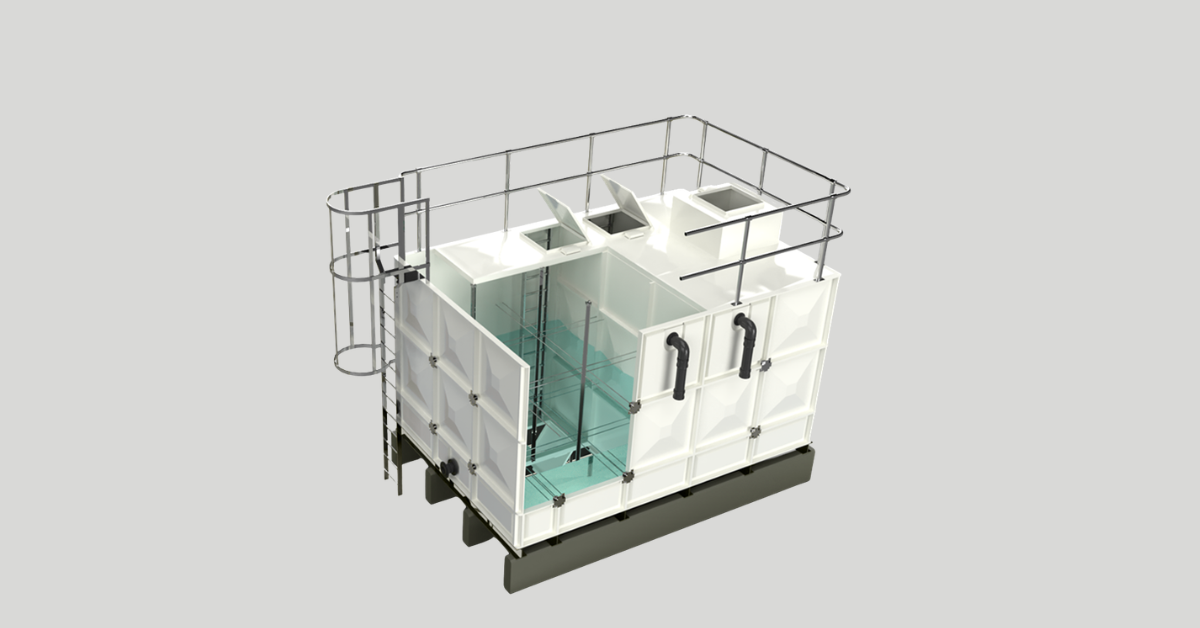
Tricel is exceptionally well positioned to support commercial refurbishment, fit-out, and niche growth projects thanks to its advanced water storage solutions and experienced technical team. Tricel’s water storage tanks are manufactured from high-quality Glass Reinforced Plastic (GRP), offering outstanding durability, corrosion resistance, and full compliance with Reg.4/WRAS, LPCB, and ISO 9001 standards. The range includes modular sectional tanksideal for large-scale commercial sites such as data centres and laboratoriesas well as one-piece and specialised tanks for restricted spaces or bespoke requirementsTricel’s team provides expert support throughout the project lifecycle, from specification and sizingto installation guidance and CPD-certified training for consultants and contractors. This combination of product quality, technical expertise, and regulatory knowledge makes Tricel a reliable partner for delivering resilient, compliant, and future-ready water infrastructure in commercial environments. 

Risks and Challenges

Despite the positive outlook for 2026, several risks could impact the pace and distribution of recovery: 

Tax and policy uncertainty: The Autumn Budget and further tax rises could impact both business and consumer confidence. Uncertainty over where tax increases will fall is already constraining investment and spending decisions. 

Skills shortages: Construction employment remains below pre-pandemic levels, with acute shortages in skilled trades, project management, and regulatory compliance. The sector lost over 278,000 workers since 2019, with the majority being experienced, older workers. 

Project delays: Delays to major infrastructure and housing projects, especially those requiring regulatory approvals (e.g., BSR, planning) or facing viability challenges, remain a key risk. 

Inflation and costs: While construction cost inflation is easing, prices remain elevated compared to pre-pandemic levels. Wage inflation, materials costs, and supply chain disruptions continue to impact project viability. 

Consumer and business confidence: Persistent uncertainty, high savings ratios, and subdued consumer confidence are holding back discretionary spending and investment, particularly in housing and retail. 

What This Means for our Partners

1. Plan for Gradual Recovery

Expect a slow but steady market recovery, with infrastructure and water projects leading the way. Private housing and commercial sectors will recover more slowly, dependent on interest rate cuts, improved affordability, and policy support. Clients should anticipate longer lead times for project approvals and delivery, especially in regulated sectors. 

2. Focus on Resilience and Compliance

Clients should prioritise projects that enhance water resilience, meet environmental regulations, and deliver long-term value. Early engagement with regulatory frameworks (e.g., Environmental Destination, AMP8, MEES) and best practice planning is essential. Demonstrating compliance and sustainability will be critical for securing funding and approvals. 

3. Leverage Niche Growth Areas

Opportunities exist in data centres, energy, logistics, and water infrastructure. Tricel Water UK’s expertise in water management, treatment, and compliance positions it as a key partner for these sectors. Engaging early with clients in these growth areas can help secure a place in supply chains and frameworks. 

4. Monitor Policy and Funding

Stay informed on government budgets, regulatory changes, and funding streams (e.g., AMP8, infrastructure pipelines, public sector decarbonisation schemes) to anticipate shifts in demand and project timelines. Proactive engagement with industry consultations and policy updates will help clients adapt to changing requirements. 

5. Prepare for Skills and Supply Chain Challenges

Clients should assess their capacity to deliver projects in a tight labour market and consider partnerships, training, and supply chain diversification to mitigate risks. Early procurement and collaboration with trusted suppliers will be key to managing costs and timelines. 

Key Takeaways

Infrastructure (+3.9%) and industrial (+2.6%) sectors are forecast to lead growth, driven by energy, water, and logistics investment.

Further tax rises, project delays, skills shortages, and subdued consumer confidence are key risks.

Plan for resilience, align with regulatory frameworks (e.g., Environmental Destination), and prioritise projects that deliver long-term environmental and economic value.

Growth in these sectors will be gradual and dependent on interest rate cuts, improved affordability, and policy support.

AMP8 represents a step-change in water sector investment, with a focus on resilience, leakage reduction, and environmental compliance. Suppliers should align offerings with these priorities and engage early with water companies and delivery partners.

By providing solutions that support water efficiency, resilience, and compliance with environmental and planning regulations, Tricel Water UK can help clients secure funding, approvals, and long-term project success. Speak to our Water Specialists today!

Sources

  1. Construction Products Association, Construction Industry Forecasts Autumn 2025 
  2. Office for National Statistics, Construction Output in Great Britain: September 2025 
  3. Environment Agency, National Framework for Water Resources 2025 
  4. Environment Agency, Environmental Destination Technical Report 2025 
  5. Glenigan, Construction Review October 2025 

“Construction output is projected to rise by 2.8% in 2026, following a modest 1.1% increase in 2025.” 

“Infrastructure (+3.9%) and industrial (+2.6%) sectors are expected to outperform, driven by energy, water, and logistics investment.” 

“Taking a proactive long-term approach to environmental water planning is much more cost effective than waiting until negative impacts happen.” 

Read More...

  • Water Industry Insights & Innovations
  • Cold Water Storage Tanks
  • Case Studies
environmental destination framework

Water Resources and Environmental Destination Framework: 2026 Policy and Practice 

February 12, 2026

The UK’s water sector is undergoing a transformation. The Environment Agency’s Environmental Destination framework and new 2026 regional water resource plans are setting ambitious targets for sustainable abstraction, climate adaptation, and local engagement. Find out what this means for policy, practice, and the future of water resilience.

public sector maintenance backlog

Public Sector RM&I: Tackling the Maintenance Backlog in 2026

January 29, 2026

The UK’s public sector faces a £49bn maintenance backlog in 2026, with urgent needs in MOD, NHS, and schools. Funding for critical repairs is rising, but local authority budgets remain under pressure, driving a focus on essential works and decarbonisation.

UK construction market 2026

UK Construction Market Outlook 2026: Navigating Uncertainty, Finding Opportunity 

January 15, 2026

2026 brings cautious optimism for the UK construction sector, with output forecast to grow by 2.8%. Infrastructure and industrial construction are set to lead the recovery, while private housing and commercial sectors face ongoing headwinds. Explore what this means for Tricel Water UK, its customers, and project partners.

Logo - Veriforce

Tricel Water: CHAS Accredited Water Tank Supplier You Can Trust

December 9, 2025

Discover Safe Contractor Approved CHAS accredited certification, ensuring water systems meet the highest safety, compliance, and quality standards.