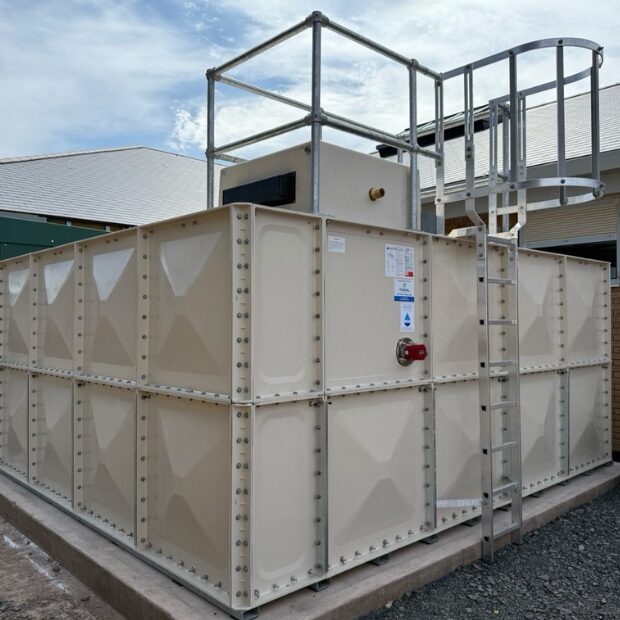
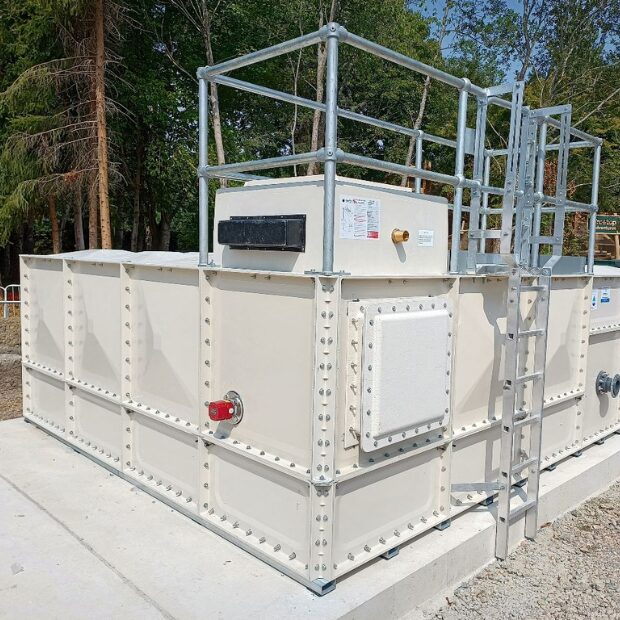

LPCB Approved Sprinkler Tanks
Home » Water Regulation » LPCB Approved Sprinkler Tanks
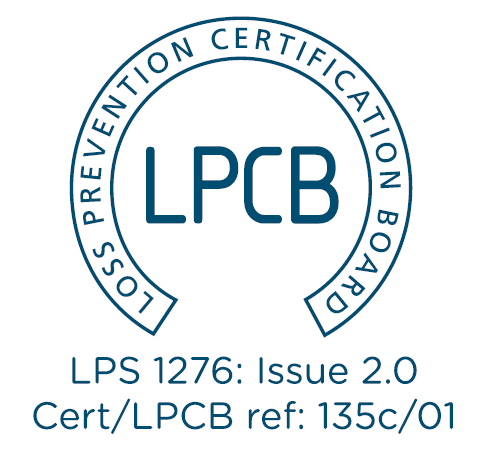
LPCB-approved sprinkler tanks are essential for fire protection systems in the UK. The Loss Prevention Certification Board (LPCB) sets recognised standards for the design, construction, and performance of water tanks used in fire suppression. Compliance is not optional — for many buildings, insurers and local fire authorities require it.
“LPCB certification proves a sprinkler tank is tested and approved for fire protection, ensuring reliability in emergencies and compliance with insurance and safety requirements.”
What is LPCB Certification for Tanks?
- LPCB stands for Loss Prevention Certification Board, a globally recognised body that certifies fire safety products.
- For water tanks, LPCB approval means the tank has been independently tested to ensure it can reliably deliver water to sprinkler systems during a fire.
- Certification applies to the tank design, materials, installation, and long-term performance.
Why is LPCB Approval Important for Sprinkler Systems?
- Life safety – ensures water is available when sprinkler systems are triggered.
- Insurance compliance – many insurers require LPCB certification for fire water storage tanks.
- Regulatory acceptance – building control and fire authorities recognise LPCB as the benchmark.
- Risk reduction – certified tanks reduce liability for building owners and managers.
Do All Sprinkler Tanks Need LPCB Approval?
- In practice, yes — any tank used for fire suppression systems in commercial, industrial, or residential buildings should be LPCB-certified.
- Non-certified tanks may fail inspections and invalidate insurance cover.
- Domestic water storage tanks, even if large, do not substitute for LPCB-approved sprinkler tanks.
How Do LPCB Tanks Differ from Standard Water Storage Tanks?
Feature | LPCB Sprinkler Tank | Standard Cold Water Tank |
Purpose | Fire suppression | Potable or general use |
Certification | LPCB approved | WRAS/BS EN 13280 |
Testing | Fire reliability, structural load, durability | Hygiene, potable safety |
Inspection frequency | Regular fire safety inspections | Annual hygiene inspections |
Insurance requirement | Mandatory in many cases | Not required |
Tricel LPCB-Certified Tanks
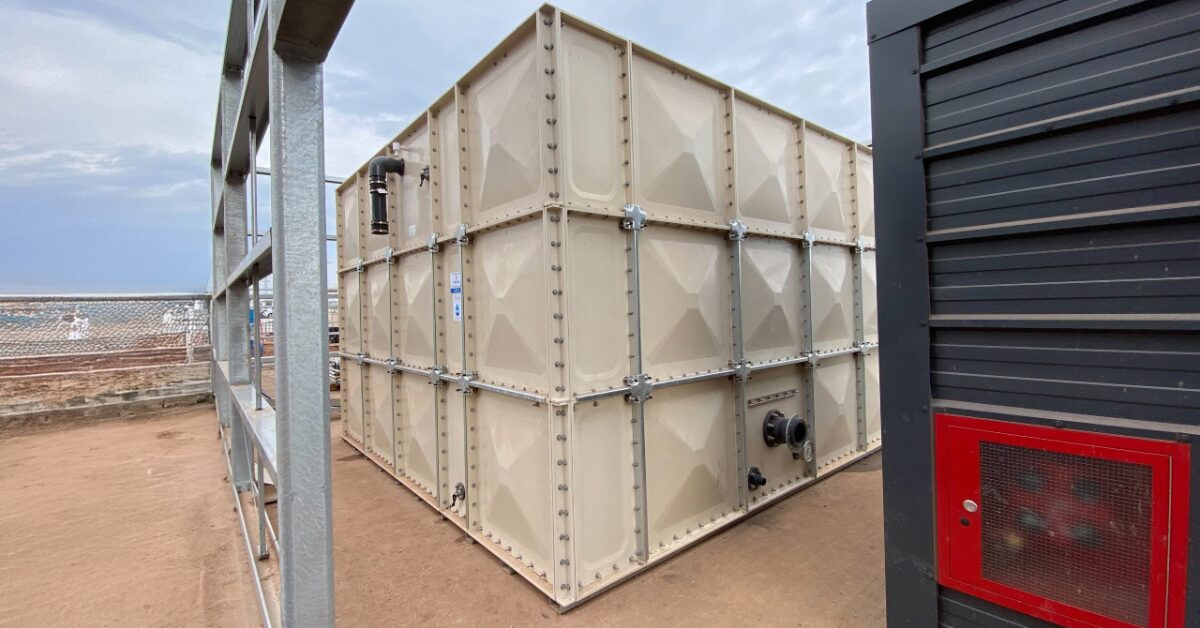
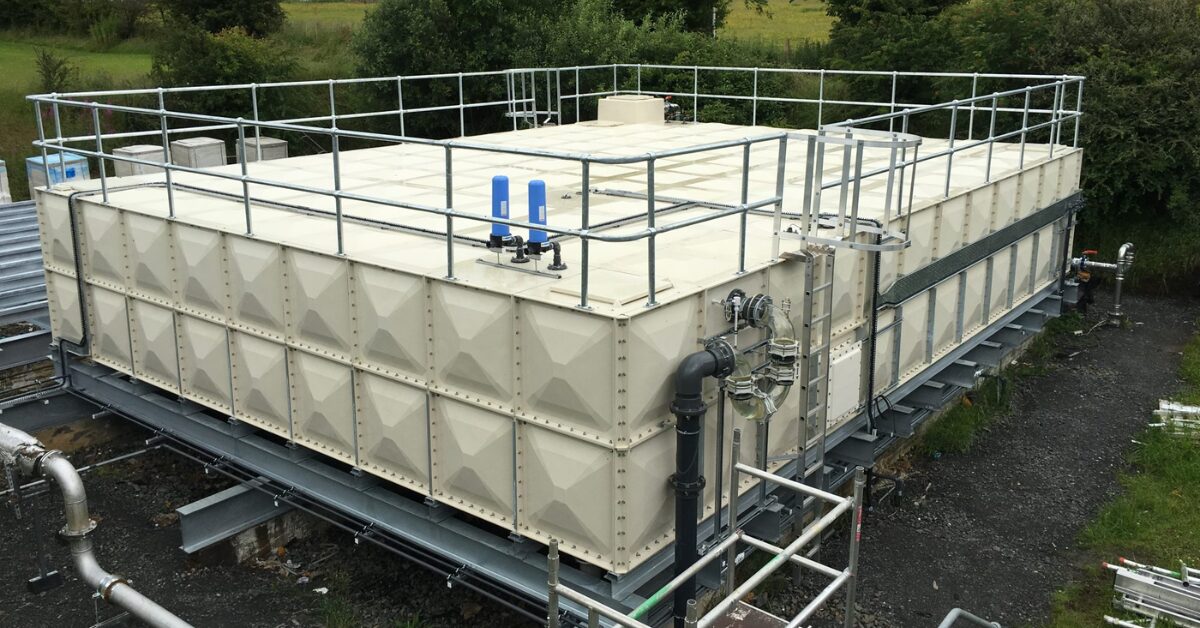
Tricel manufactures and installs LPCB-approved GRP sprinkler tanks, designed to provide:
- Certified compliance for insurers and fire authorities.
- Long service life with corrosion-resistant GRP.
- Modular designs to suit restricted access sites.
- Full documentation and certification for handover.
LPCB certification confirms a sprinkler tank has been tested and approved for reliable fire protection performance.
It ensures compliance with insurers, fire authorities, and building safety regulations.
Yes. Without it, tanks may not be accepted for fire protection use.
LPCB tanks are tested for fire performance, whereas standard tanks are designed for potable or process water storage.
Read More...
- Water Tank Installation & Maintenance
- Cold Water Storage Tanks
- Case Studies

Cold Water Tank Sizing: How to Calculate Storage Volume for Multi-Storey Buildings
A technical guide to cold water tank sizing methodology for multi-storey buildings — covering demand estimation, resilience calculations, water age, Legionella risk, and a worked sizing example.
Confined Space Entry in Building Maintenance: Obligations and Safe Systems
A practical guide to confined space entry obligations for building maintenance teams and contractors — covering the Confined Spaces Regulations 1997, permit to work, atmospheric testing, standby arrangements, and cold water tank entry.
Backflow Prevention in Building Water Systems: Fluid Categories and Device Selection
A technical guide to backflow prevention under the Water Fittings Regulations — fluid categories 1 to 5, device types for cold water cisterns, the Type AG air gap requirement, and common compliance failures.
Cold Water System Commissioning: Cleaning and Disinfection to BS EN 806-5
A practical guide to cold water system commissioning, cleaning, and disinfection in line with BS EN 806-5. Covers procedure, chlorination residuals, flushing, clearance for service, and handover documentation.