Why Water Is the Hidden Vulnerability in UK Data Centres (and How to Fix It)

UK data centres

The rising exposure few teams budget for

Water‑related cooling failures in UK data centres account for a significant proportion (approximately 23%) of Tier III and IV data centre outages. Depending on the criticality of the facility, the resulting downtime can cost between £4,000 and £300,000 per hour. These figures are widely referenced by industry operators and analysts and are consolidated in the Data Centre Water Storage Resilience Guide 2026, drawing on research from the Ponemon Institute.

At the same time, indicators of water stress across the UK are becoming more pronounced. Drought restrictions, more frequent heatwaves, and supply interruptions are increasing the risk that facilities reliant on mains water will face reduced flows or temporary shutdowns. As highlighted in the guide, onsite water storage has therefore moved from being a “nice to have” to an operational necessity, providing critical resilience against these external pressures.

How cooling architectures create a dependency on water

Most high efficiency data centre cooling designs use water as the primary or assistive heat rejection medium:

Water-cooled Chillers & Cooling Towers: Highest thermal efficiency; require continuous makeup water for evaporation and blowdown. Loss of makeup rapidly degrades performance.  

Adiabatic / Hybrid Systems: Intermittent but intensive water use during hot spells; storage must be sized for peak, not average, demand.  

Direct Liquid Cooling (DLC): Efficient at rack level but still relies on secondary water loops for final heat rejection.  

Without adequate onsite reserves, even minor supply dips can cause condenser temperature rise, chiller trips, and cascading thermal failure.  

The current resilience gap (and warning signs)

Typical risk indicators include: 

  • No or minimal storage autonomy (only hours of cover).  
  • Single large tank without segmentation, creating a single point of failure.  
  • No BMS integration for level/quality alarms; delayed response to leaks or rapid drawdown.  
  • Underprovisioned fire reserves incompatible with BS EN 12845 requirements.  
CHECKLIST

Water Resilience Assessment Checklist

This Water Resilience Assessment Checklist for UK data Centres provides a structured, engineering level framework for evaluating the security, sufficiency, and redundancy of water systems in mission-critical data centres.

water resilience assessment checklist

UK compliance in brief

CNI operators must demonstrate due diligence across backflow prevention, hygiene, Legionella control, and firewater capacity.

UK Data Centres must demonstrate compliance with the following:

To learn more about the compliance requirements for Water Storage in UK Data Centres, download our free “Water Storage as a Pillar of Resilience in CNI data Centres” Whitepaper

The business case: resilience that pays for itself

For many operators, investing between £400,000 and £1 million in onsite water storage can deliver a payback within approximately two years, largely through the avoidance of unplanned downtime. In practical terms, a single eight‑hour outage at a cost of £50,000 per hour can effectively offset the capital cost of a standard storage system.

What to do next?

1. Run a water resilience assessment: quantify peak cooling water demand, fire reserve needs, local mains reliability, and climate exposure.


To help you with your assessment, use this free, fully editable Water Resilience Assessment Checklist.


2. Target autonomy: Tier III ≈ 24–48h; Tier IV ≈ 48–120h, plus fire reserve and 10–15% buffer.  


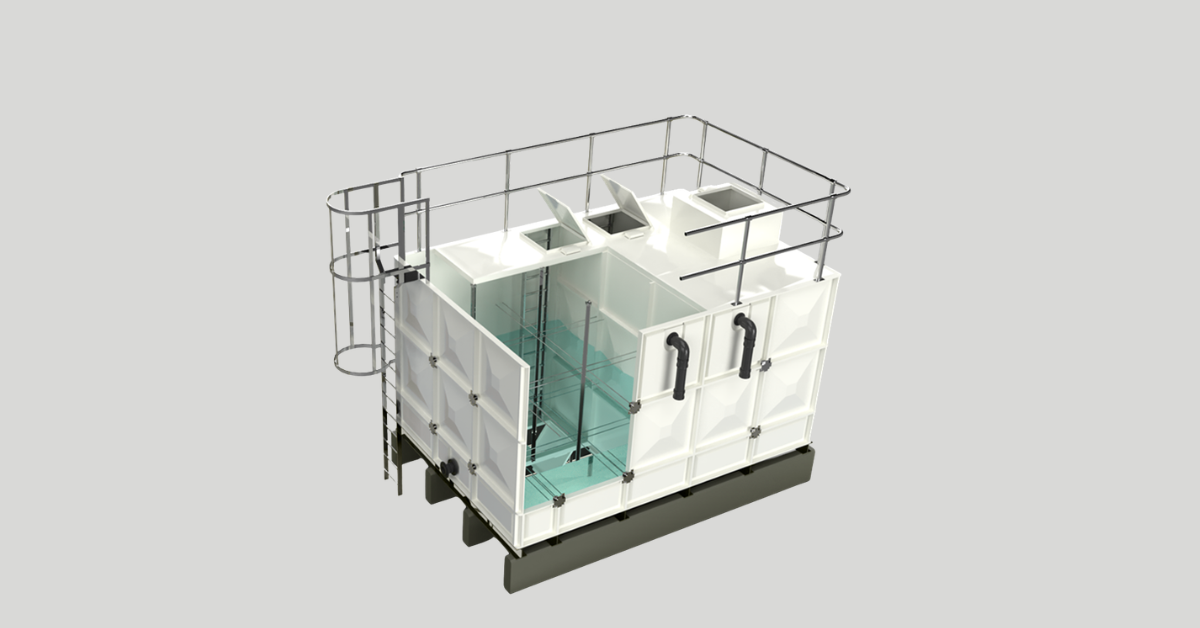
3. Design for redundancy: multitank or compartmented GRP arrays to avoid single points of failure.  


4. Integrate with BMS: level, flow, quality (pH, conductivity, turbidity), and leak detection with automated alarms.  


5. Plan compliance & maintenance: HSE L8 risk assessment cadence; quarterly tests; annual cleaning; records for audits/insurers.  


Download the UK Data Centre Water Compliance Checklist to ensure regulatory compliance is covered!

Q&A

Typically loss of makeup watertreatment issues, or backflow/contamination incidents that force shutdowns; ~23% of Tier III/IV outages relate to water cooling failures (Ponemon). 

No. When adequately supplied. The risk is peak period water shortfall; storage sized for peak draw avoids fallback to less efficient dry modes under stress. 

Typically non potable is fine for cooling, but potable WRAS/Reg.4 approved storage is required where systems serve welfare or domestic uses. Keep separate storage to avoid cross contamination. 

48–120 hours of cooling water plus dedicated BS EN 12845 fire reserve; add 10–15% buffer for maintenance/peaks. 

Inadequate firewater capacity or records can invalidate coverage or raise premiums; documented, compliant storage improves your risk profile. 

Sources

  1. Ponemon Institute (2023). Cost of Data Center Outages. Traverse City, MI: Ponemon Institute LLC. 
  2. UK Environment Agency. Water Resources Planning. Available at: https://www.gov.uk/government/organisations/environment-agency 
  3. Health and Safety Executive. Legionnaires’ disease: The control of legionella bacteria in water systems (L8). HSE Books. 
  4. British Standards Institution. BS 8558:2015 Guide to the design, installation, testing and maintenance of services supplying water for domestic use within buildings and their curtilages. London: BSI. 
  5. Met Office. UK Climate Averages. Available at: https://www.metoffice.gov.uk 

Read More...

  • Water Industry Insights & Innovations
  • Water Regulation
UK data centres

Why Water Is the Hidden Vulnerability in UK Data Centres (and How to Fix It) 

February 26, 2026

Water is now a core resilience risk for UK data centres. From mains interruptions to heatwaves, a single water supply issue can trigger thermal escalation and costly downtime. This article explains why the risk is rising, how cooling architectures depend on water, and the practical steps to start closing the resilience gap.
environmental destination framework

Water Resources and Environmental Destination Framework: 2026 Policy and Practice 

February 5, 2026

The UK’s water sector is undergoing a transformation. The Environment Agency’s Environmental Destination framework and new 2026 regional water resource plans are setting ambitious targets for sustainable abstraction, climate adaptation, and local engagement. Find out what this means for policy, practice, and the future of water resilience.

public sector maintenance backlog

Public Sector RM&I: Tackling the Maintenance Backlog in 2026

January 29, 2026

The UK’s public sector faces a £49bn maintenance backlog in 2026, with urgent needs in MOD, NHS, and schools. Funding for critical repairs is rising, but local authority budgets remain under pressure, driving a focus on essential works and decarbonisation.

UK construction market 2026

UK Construction Market Outlook 2026: Navigating Uncertainty, Finding Opportunity 

January 15, 2026

2026 brings cautious optimism for the UK construction sector, with output forecast to grow by 2.8%. Infrastructure and industrial construction are set to lead the recovery, while private housing and commercial sectors face ongoing headwinds. Explore what this means for Tricel Water UK, its customers, and project partners.